The Work That Never Ends: On the Sacred Obligation of Owning a Property of True Consequence
There is a particular conversation that takes place, sooner or later, between every serious owner of a great estate and the person they have come to trust most with its care. It is not a conversation about value, or about plans for the guest wing, or about the landscaping schedule for the coming season. It is a quieter reckoning—the moment when the owner acknowledges, with something between resignation and reverence, that the property will never be complete. That the work is not a phase to be concluded but a condition to be inhabited.
For those who have arrived at this understanding, something fundamental shifts. Ownership, in the conventional sense, gives way to something more demanding and, ultimately, more meaningful.
The Illusion of Completion
Most real estate transactions are implicitly structured around the promise of arrival. You acquire the property, you improve it to your satisfaction, and you inhabit a finished thing. This logic governs even the most ambitious residential projects. The renovation has a completion date. The restoration has a budget and a final punch list. The estate, once delivered, is understood to be done.
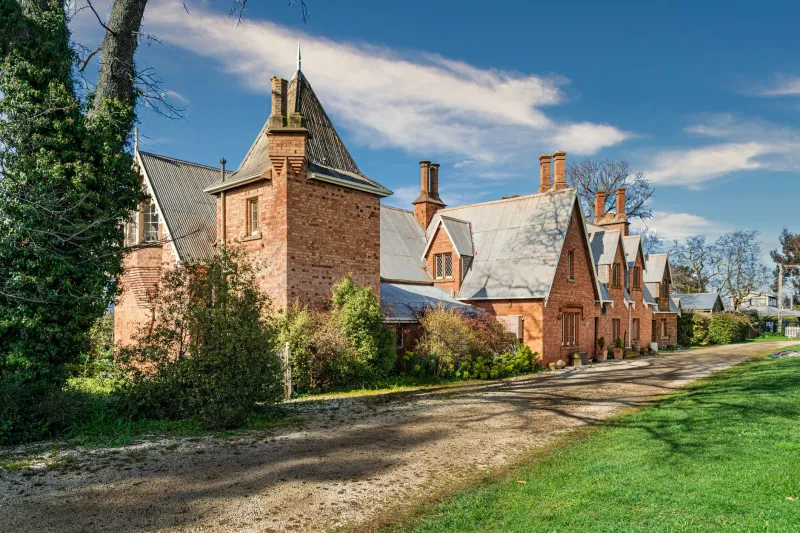
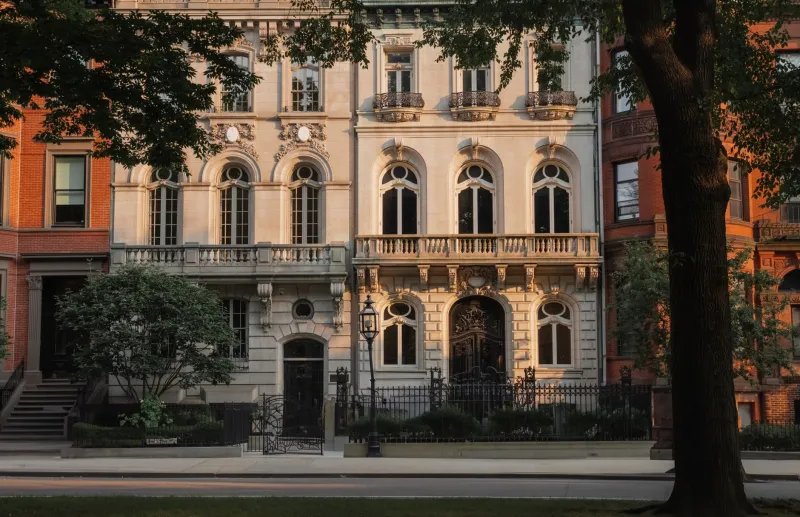
Properties of genuine architectural or historical significance refuse this narrative with considerable force. A nineteenth-century stone manor in the Hudson Valley does not reach equilibrium. A Beaux-Arts townhouse on a storied Philadelphia street does not stay restored—it requires continuous, expert, and often expensive attention simply to remain what it already is. The materials are too old, too rare, and too exacting in their demands. The craftsmanship required to maintain them is increasingly difficult to source. And the standards against which the work is measured are set not by the owner's preferences but by the property's own history.
Owners who enter this world expecting a finished product tend to find it disorienting. Those who enter understanding that they are joining an ongoing project—one that began long before them and will continue long after—tend to find it, against all expectation, deeply satisfying.
The Vocabulary of Perpetual Stewardship
Among preservation architects, estate conservators, and the craftspeople who specialize in historic materials, there is a shared vocabulary that distinguishes their work from conventional construction. They speak of reversibility—the principle that interventions should not foreclose future options. They speak of authenticity, not as a fixed condition but as a standard of fidelity to original intent that must be interpreted anew with each generation of repairs. They speak of the building as a living document, one that accumulates meaning through the layered evidence of its own survival.
For owners who engage seriously with this vocabulary, the property ceases to be an object and becomes a relationship. The leaking slate roof is not a problem to be solved; it is a conversation with the original roofer's choices, conducted across a century of weather. The faded plasterwork in the formal reception hall is not a deficiency to be corrected; it is a record of how the light has moved through those windows across the lifetimes of everyone who has stood beneath it.
This is not romanticism for its own sake. It is a practical orientation that produces better stewardship decisions. Owners who understand their role as custodial rather than proprietary are more likely to consult specialists, more likely to accept the slower and more expensive path, and more likely to resist the temptation of interventions that would satisfy the eye while diminishing the property's deeper integrity.
The Financial Architecture of Endless Care
The economics of perpetual restoration are, to put the matter plainly, substantial. Owners of significant historic properties routinely allocate between one and three percent of a property's replacement value to annual maintenance—a figure that climbs considerably when active restoration work is underway. For an estate of genuine consequence, this translates to annual expenditure that would represent the full acquisition cost of many luxury properties.
The budgeting discipline required is correspondingly rigorous. Conservation master plans—multi-decade documents that sequence and prioritize intervention work—have become standard practice among the most serious owners. These plans are prepared by preservation architects in consultation with structural engineers, materials conservators, landscape historians, and, in some cases, archivists who have researched the property's original construction records. They are living documents, revised as conditions change and as new information comes to light.
What these plans share, almost without exception, is an acknowledgment of incompleteness. They do not describe a path to a finished property. They describe a path to a well-maintained one—an important distinction that experienced owners grasp quickly and that newcomers to this world sometimes resist.
The Psychological Dimension
The owners who find the deepest satisfaction in significant properties are, almost universally, those who have made peace with open-endedness. They have relinquished the satisfaction of completion and replaced it with something more durable: the satisfaction of continuity. Each season's work, each carefully executed repair, each decision made in fidelity to the property's character rather than the owner's momentary preference—these accumulate into a form of meaning that finished things cannot offer.
There is also, for many of these owners, a relationship with mortality that is worth naming. A great estate will outlast its current steward. The work being done now is, in the most literal sense, work being done for someone who has not yet arrived—a future owner, a future generation, perhaps a future public that will encounter the property in a context its present owner cannot foresee. This awareness, far from being melancholy, tends to be experienced as clarifying. It places the work in a frame larger than any individual life, and that enlargement is, for those who feel it, a form of privilege.
What the Unfinished Estate Teaches
The perpetual restoration is not a failure of planning or a consequence of neglect. It is the natural condition of any property whose significance exceeds the span of a single ownership. To own such a property is to accept a particular kind of incompleteness—not the incompleteness of a project poorly managed, but the incompleteness of a living thing that continues to make demands because it continues to matter.
For those who have found their way to this understanding, the question is no longer when the work will be finished. The question, more generative and more honest, is simply: what does the property need from us now?