Between Inheritance and Invention: The Impossible Bargain of Owning a Property That History Also Claims
There is a particular species of real estate transaction that concludes not with champagne but with something closer to a reckoning. The deed transfers. The keys change hands. And then, almost immediately, the new owner discovers that the property they have just purchased does not entirely belong to them.
This is the quiet paradox at the center of acquiring an estate of genuine historical consequence — a home that has served as architectural landmark, cultural touchstone, or environmental anchor long before any current occupant arrived. The building, the land, the very atmosphere of such a place carries prior claims. Not legal ones, necessarily. But claims of a different and more persistent order.
For a growing cohort of ultra-wealthy buyers, navigating this paradox has become one of the defining challenges — and, they will tell you privately, one of the defining privileges — of significant property ownership.
The Moment the Archive Asserts Itself
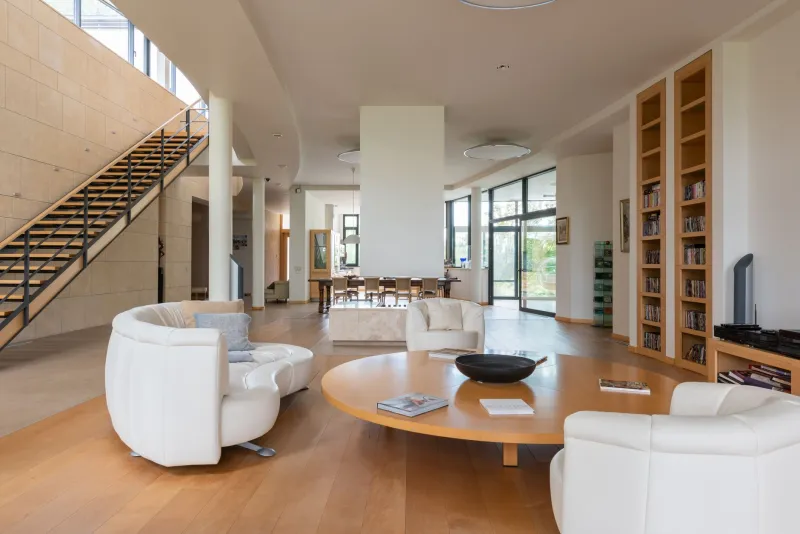
Martin Ellerbee, a private equity principal who acquired a mid-century modern compound on the California coast several years ago, describes the shift in his understanding as arriving gradually. The property, designed by a regionally celebrated architect whose other works had since been demolished, was among the last intact examples of a particular postwar residential idiom.
"I purchased it as a home," Ellerbee says. "Within eighteen months, I understood that I had also purchased a responsibility. Architectural historians were writing to me. Graduate students were requesting site visits. A preservation society sent a very polite letter that was, beneath its politeness, something of a warning."
The warning was not litigious. It was moral. And Ellerbee found, to his own mild surprise, that it landed.
This experience — of an estate's cultural gravity gradually asserting itself against the owner's initial domestic intentions — is common enough among stewards of significant properties that preservation consultants have developed language for it. Some speak of a property's "claim radius," the breadth of stakeholders — historians, community members, architectural advocates, environmental groups — who feel a legitimate interest in what happens to a given place. Others describe a kind of "stewardship awakening," the moment an owner transitions from buyer to custodian, often without having planned to.
The Geometry of Compromise
What separates the most respected stewards from those who generate controversy is rarely the scale of their intervention. It is, rather, the quality of their reasoning and the sincerity of their engagement with the property's existing logic.
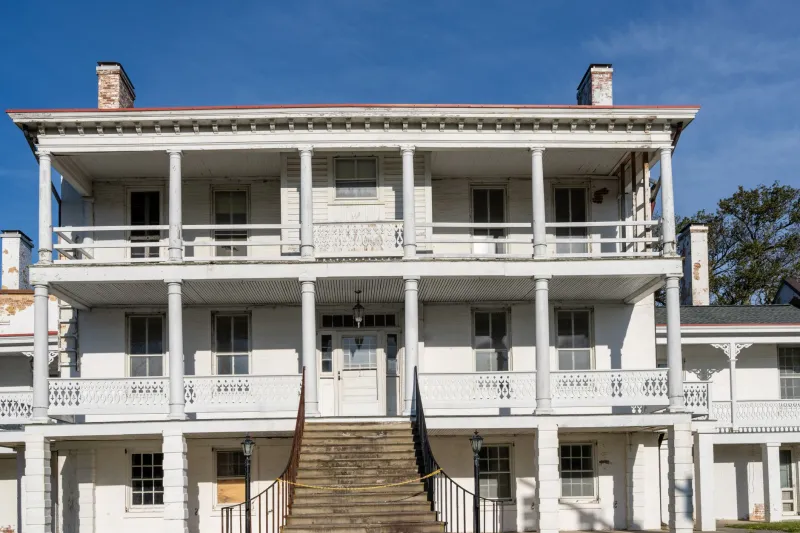
Catherine Voss-Hartwell, whose family has overseen a Federal-period estate in Virginia's Piedmont region for two generations, articulates the distinction with precision. "There is a difference between evolving a house and erasing it," she says. "Every generation has added something. The question we always ask is whether what we are adding is in conversation with what came before, or simply indifferent to it."
For Voss-Hartwell, the practical expression of this philosophy has meant extensive consultation — with preservation architects, with local historical commissions, and with the informal community of scholars who have studied the property. A proposed kitchen expansion that would have obscured a significant original hearth was redesigned three times before a solution emerged that satisfied both contemporary function and historical integrity. The process took fourteen months.
"People ask whether it was worth it," she says. "I find the question difficult to answer, because I am not sure 'worth it' is the right frame. The house deserved the effort. That is a different calculation."
Modernization as Interpretation
Not every steward arrives at preservation through restraint. Some of the most compelling examples of thoughtful stewardship involve interventions that are, on their face, quite bold — but that demonstrate a sophisticated reading of the property's essential character.
A notable instance involves a 1920s Craftsman estate in the Pacific Northwest, acquired by a technology entrepreneur who commissioned a substantial addition from a nationally recognized architect. The addition — contemporary in material and form — was designed to read clearly as new construction rather than historical mimicry. Its placement preserved the original structure's primary elevations entirely. The result, praised by architectural critics and preservationists alike, has become something of a reference point in discussions about how contemporary wealth can engage with historical fabric without either freezing it or consuming it.
The owner's stated philosophy, offered in a rare interview shortly after completion, was characteristically direct: "I did not want to pretend the house had always looked like something it had not. I wanted to be honest about the moment I arrived in its life."
This notion of temporal honesty — of an owner understanding themselves as one chapter in a longer narrative rather than its final author — recurs consistently among stewards who have navigated the tension most successfully.
When Preservation Costs More Than the Property
The financial dimension of significant stewardship is rarely discussed openly, but it is substantial. Properties with genuine historical or architectural importance frequently require maintenance regimes that bear no relationship to conventional residential upkeep. Specialized craftspeople, period-appropriate materials, and the extended timelines that careful restoration demands can generate annual costs that rival the original acquisition price over a decade of ownership.
Gerald Ashworth, whose portfolio includes several properties of historical significance, is characteristically understated on the subject. "You do not acquire these estates as investments in the conventional sense," he says. "The return is of a different kind. What you are investing in is the continuation of something. Whether that is worth the expenditure is a question each owner must answer for themselves."
For some, the answer involves creative structures: historic tax credits, preservation easements, and partnerships with land trusts or cultural institutions that formalize the stewardship relationship and distribute both the cost and the responsibility. These arrangements, increasingly common among sophisticated owners, represent a kind of institutionalization of the steward's dilemma — an acknowledgment that some properties are genuinely too significant for any single owner to carry alone.
The Reward That Cannot Be Appraised
Perhaps the most consistent observation among those who have accepted the full weight of stewardship is that the experience transforms their relationship not only to the property but to the concept of ownership itself.
"I came into this believing that owning something meant it was yours to do with as you wished," Ellerbee reflects. "I leave it — and I will eventually leave it — believing that the most significant things we own are never entirely ours. We hold them in trust. The question is whether we hold them well."
This is the steward's dilemma in its most distilled form: not a problem to be solved, but a condition to be inhabited with care. The estates that endure, that continue to matter to the culture and the landscape around them, are invariably those whose owners accepted the terms of that condition — not grudgingly, but with something approaching gratitude.
At Helmerstone, we have long observed that the most distinguished acquisitions are rarely those that simply reflect the tastes of their current occupants. They are the ones where owner and property have entered into a genuine conversation — one that the property, in its way, has been conducting for far longer than any individual lifetime.