The Inversion: When the Retreat Becomes the Residence
The vocabulary of luxury real estate has long distinguished between primary and secondary residences as though the categories were self-evident—the primary being the serious address, the center of professional and civic life; the secondary being the reward, the escape, the place where the constraints of consequence temporarily lift. It is a vocabulary that made perfect sense for a particular model of affluent life. That model is dissolving.
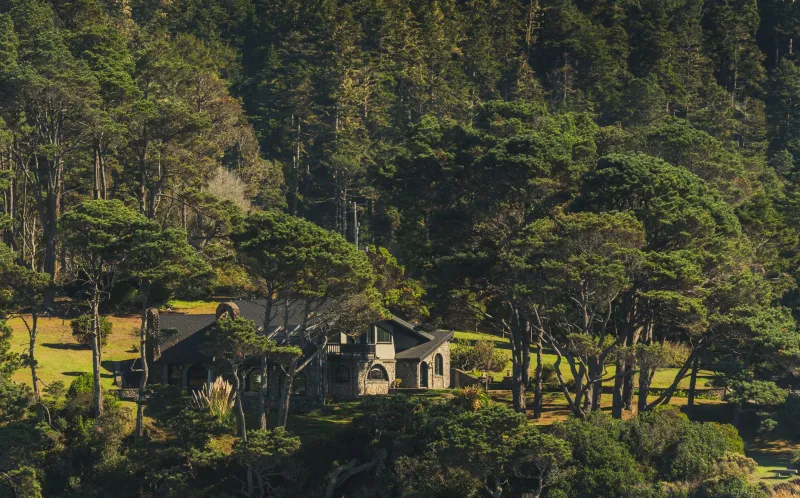
Among a growing cohort of ultra-high-net-worth Americans, the property that was designed as a retreat has quietly become the property where life is most fully lived. Not the vacation home pressed into year-round service by circumstance, but the deliberately chosen primary—the place that was always, if one is honest, the more considered acquisition.
How the Inversion Happens
The pattern rarely announces itself. A family acquires a second property—perhaps a farm in Virginia's Piedmont, a compound on a private lake in the Adirondacks, a ranch in the foothills of the Colorado Rockies. The acquisition is framed, initially, as a complement to the primary residence: a weekend destination, a summer anchor, a place to decompress.
Over time, however, something shifts. The family finds itself engineering reasons to spend more time at the secondary property. Remote work arrangements are structured around it. School decisions are reconsidered in its vicinity. The primary residence—a townhouse in Manhattan, a traditional home in a Chicago suburb, a formal estate in Greenwich—is maintained, visited, and discussed in the present tense. But it is the retreat that has become, in every functional sense, the center.
"I've watched this happen with enough clients that I no longer treat it as unusual," says one advisor who works with multi-generational family offices. "The secondary property was always the one they chose with their whole selves. The primary was chosen with their résumé."
The Psychology of the Chosen Place
There is something revealing in the distinction between a property chosen for professional positioning and a property chosen for genuine preference. The primary residence of a highly successful American family frequently reflects a particular set of external coordinates: the right zip code, the right school district, the right proximity to the right institutions. These are not trivial considerations. But they are, at bottom, considerations about how a life looks from the outside.
The secondary property is, almost by definition, chosen differently. Because it carries no professional obligation, no social expectation, no obligation to legibility, it tends to be chosen for reasons that are harder to articulate but more deeply felt. The quality of light in a particular valley. The relationship between a specific house and the water it overlooks. The sense, difficult to name precisely, that a landscape is asking something of its inhabitants.
When the people who chose that property on those terms begin spending the majority of their time there, something has shifted in their theory of what a life is for. They have decided, whether consciously or not, that the place they chose with their whole selves is the place their whole selves ought to inhabit.
The Practical Architecture of Inversion
The logistical implications of this shift are considerable, and the families who navigate it most successfully tend to be those who plan it with the same deliberateness they bring to their most significant financial decisions.
The former primary residence rarely disappears from the portfolio. More commonly, it is repositioned—maintained as a legacy asset, retained for the tax and domicile considerations that a formal primary residence still carries in many states, or preserved as a base for the professional and social obligations that continue to require a presence in a major metropolitan area. In some cases, it becomes a vehicle for the next generation: a property held for the benefit of adult children who are building careers in cities their parents have quietly left behind.
The new primary—the former retreat—is often upgraded in ways that reflect its changed status. A guest house is expanded to accommodate extended family visits. A home office is designed with the seriousness that a professional life, now conducted remotely, requires. Kitchens, wine cellars, and entertaining spaces are reconsidered for year-round rather than seasonal use. The infrastructure of a working household replaces the lighter infrastructure of a vacation property.
What the Landscape Provides
The properties that most commonly become the subject of this inversion share certain qualities that are worth examining. They tend to be set within landscapes of genuine character—terrain that changes across seasons, that presents itself differently in morning and evening light, that offers the kind of environmental complexity that rewards sustained attention.
They tend to be properties where the relationship between interior and exterior is active rather than decorative—where the landscape is not merely a view but a presence, something that participates in the life of the house rather than serving as its backdrop.
And they tend to be properties that were, from the beginning, conceived with a degree of intentionality that the primary residence—often acquired under time pressure, in a competitive market, with a checklist rather than a vision—could not match.
The Tax and Legal Dimension
The financial and legal architecture of domicile inversion is complex and varies significantly by state. Establishing a new primary residence for tax purposes requires genuine change in behavior, not merely a change in designation—the IRS and state revenue departments are sophisticated about the distinction. Families undertaking this transition typically engage tax counsel, estate planners, and real estate attorneys simultaneously, ensuring that the practical reality of where life is lived aligns with the legal structure of where it is officially domiciled.
Several states with no income tax—Florida, Texas, Wyoming, Nevada—have become the official domicile of record for families whose actual daily lives are centered in properties that those states' tax regimes make considerably more attractive. The retreat in Jackson Hole or on the Gulf Coast is no longer merely a retreat; it is the residence of record, chosen as much for what it costs to maintain a life there as for what it feels like to live one.
A Redefinition of Home
What the inversion ultimately reflects is a renegotiation of what the word "home" is understood to mean at the highest levels of American wealth. For a previous generation, home was primarily a statement—a declaration of arrival, of affiliation, of position. For the generation now undertaking this quiet reordering, home is increasingly understood as an environment: a physical setting calibrated to support the particular quality of life one has decided, after considerable experience, to actually pursue.
The retreat was always the more honest choice. The inversion is simply the decision to live accordingly.