The House That Interprets Itself: Living Inside a Property the World Considers Its Own

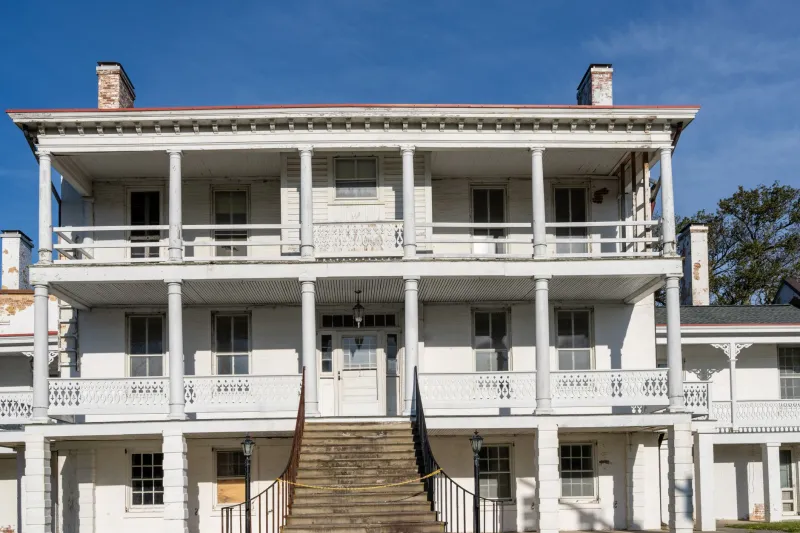
There is a particular kind of morning that arrives only in houses of exceptional age and significance. The light enters at angles that painters once studied. The floorboards carry the memory of footsteps that historians have catalogued. And somewhere in the east wing, a preservation consultant is waiting to discuss the correct species of wood for a threshold repair that the owner did not know required consultation. This is not inconvenience. It is condition—the permanent, negotiated condition of living inside a property that the broader culture has quietly decided belongs, in some meaningful sense, to everyone.
For a growing number of ultra-wealthy homeowners across the United States, the acquisition of a historically or architecturally significant estate is not merely the purchase of exceptional shelter. It is the assumption of a role that carries obligations no title search reveals. These owners do not simply inhabit their properties. They interpret them—to staff, to family members who did not grow up inside such walls, to visiting scholars, to preservation boards, and occasionally to a curious public that regards the house as a cultural artifact wearing the temporary costume of a private home.
The Weight of Significance
The tension is neither new nor simple. American architectural history is populated by estates that have passed through private hands while somehow remaining, in the collective imagination, semi-public. Houses associated with significant architects—the Prairie Style compositions of the Midwest, the shingle-clad masterworks of the Northeast, the modernist experiments scattered across California's hillsides—carry a gravitational pull that their owners often underestimate at the moment of purchase.
What changes, in recent decades, is the intensity of that pull. Digital archives, architectural databases, and the accelerating appetite for heritage tourism mean that a house of genuine distinction is now, in practical terms, more visible than at any prior moment in its existence. The owner who purchases such a property in 2025 does so in a world where the building's floor plan may be downloadable, its original drawings may be housed in a university library two states away, and its facade may appear in the background of photographs taken by strangers standing at the edge of the property line.
This visibility does not diminish the rights of ownership. It does, however, complicate the experience of it.
Performance and Authenticity
Among those who have navigated this terrain for years, a central question emerges with remarkable consistency: at what point does responsible stewardship become performance? The distinction matters more than it might appear. A homeowner who opens a significant property for an annual architectural tour is making a choice rooted in genuine civic engagement. A homeowner who does so because the alternative—the appearance of hoarding cultural heritage—feels untenable is engaged in something more ambiguous.
The most thoughtful owners tend to locate the answer not in the act itself but in the quality of attention that precedes it. Those who have studied their property's history with the same rigor they would apply to any serious intellectual pursuit—who can speak with authority about the decisions its original architect made and why, who understand the material vocabulary of the building as something more than aesthetic preference—tend to carry the interpretive burden with greater ease. Their stewardship is grounded in knowledge rather than obligation, and that grounding is legible to everyone who encounters the property in their company.
Those who have not done this work often find themselves in a more precarious position: nominally in charge of a narrative they do not fully control.
The Family Dimension
If the relationship between owner and outside world presents one set of complications, the relationship between the estate and the family who inhabits it presents another, quieter and in some ways more consequential set entirely.
Children raised inside architecturally significant houses do not always experience that significance as privilege. They may experience it as constraint—a long list of things one does not do, surfaces one does not touch, rooms that exist more as demonstrations than as spaces for living. The house that a parent regards as a profound responsibility may register to the next generation as a burden wearing the clothes of an heirloom.
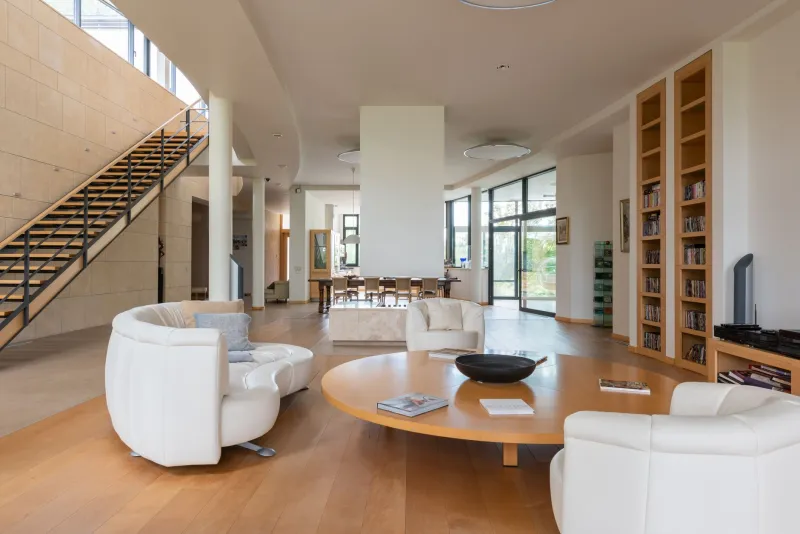
This dynamic has prompted some of the more deliberate owners to approach the matter with something approaching pedagogical intentionality. Rather than allowing the house's significance to arrive at family members as a set of prohibitions, they introduce it as a form of literacy—a way of reading space, material, and historical moment that enriches rather than diminishes the experience of daily life inside exceptional walls. The estate, in this framing, is not a museum that happens to contain a family. It is a living document that a family has been trusted to continue writing.
The Institution That Wears a Home's Face
Perhaps the most searching question that significant-property ownership raises is one of institutional identity. At a certain threshold of historical or architectural importance, a private residence begins to function as a de facto institution—shaping how scholars understand a period, how preservation advocates set their priorities, how architecture students learn to read a building. The owner's decisions about maintenance, restoration, and access ripple outward in ways that a conventional homeowner's decisions simply do not.
Some owners have responded to this reality by formalizing it: establishing private foundations, entering into conservation easements, or partnering with preservation organizations in arrangements that make the institutional dimension explicit and legally structured. Others resist formalization on the grounds that it accelerates the very transformation they are trying to resist—the conversion of a living home into a managed artifact.
Neither posture is obviously correct. The case for formalization rests on the argument that significant properties deserve durable protection that does not depend on the values of any single owner. The case against it rests on the equally serious argument that the qualities that make a house genuinely alive—the evidence of habitation, the small imperfections of daily use, the accumulated decisions of successive families—are precisely what institutional management tends to sand away.
Distinction Without Distance
What the most admired stewards of significant American estates seem to share is a capacity to hold two things simultaneously: a deep respect for what the house represents beyond their own tenure, and an equally deep insistence on actually living inside it. They do not treat the property as a charge to be managed from a careful remove. They treat it as a home that happens to carry unusual responsibilities—and they meet those responsibilities not by stepping back from the house, but by stepping more fully into it.
This is, in the end, what genuine stewardship looks like when it is working. Not performance. Not institutional management dressed in residential clothing. But the daily, unglamorous, occasionally inconvenient practice of knowing a significant place well enough to speak for it honestly—and caring enough about its future to accept that the speaking will never quite be finished.