The Quiet Transformation: When New Wealth Moves Into Old Neighborhoods
America's most storied residential enclaves were not built in a single moment—they accumulated character across generations, absorbing the tastes, values, and ambitions of successive waves of occupants. Now, as billionaires and centimillionaires increasingly choose to inhabit established neighborhoods rather than engineer new ones, a subtler and more consequential form of transformation is underway—one that raises difficult questions about what we mean when we speak of preservation, and what we are willing to sacrifice in its name.
This is not the story of gated communities rising from undeveloped land, or of master-planned resort enclaves materializing in the desert. This is the story of what happens when extraordinary wealth moves into neighborhoods that already have a history—and begins, quietly and often irrevocably, to rewrite it.
The Anatomy of a Neighborhood Under Pressure
Consider the arc of transformation in a place like Atherton, California, or in the established corridors of Palm Beach, or along the tree-lined streets of Buckhead in Atlanta. These are not interchangeable examples—each carries its own social DNA, its own architectural vocabulary, its own unwritten codes of conduct. But they share a structural vulnerability: when the ceiling of wealth in a neighborhood rises dramatically, the floor tends to follow.
The mechanism is familiar to anyone who has studied real estate at a granular level. A single extraordinary transaction—a $40 million teardown, a $60 million estate assembled from three adjacent parcels—resets the price expectations for an entire street. Longtime residents who might have remained indefinitely find themselves sitting on assets that have appreciated beyond any practical logic of continued ownership. Some sell. Others hold, watching as the neighborhood around them undergoes a renovation that is, in aggregate, a reinvention.
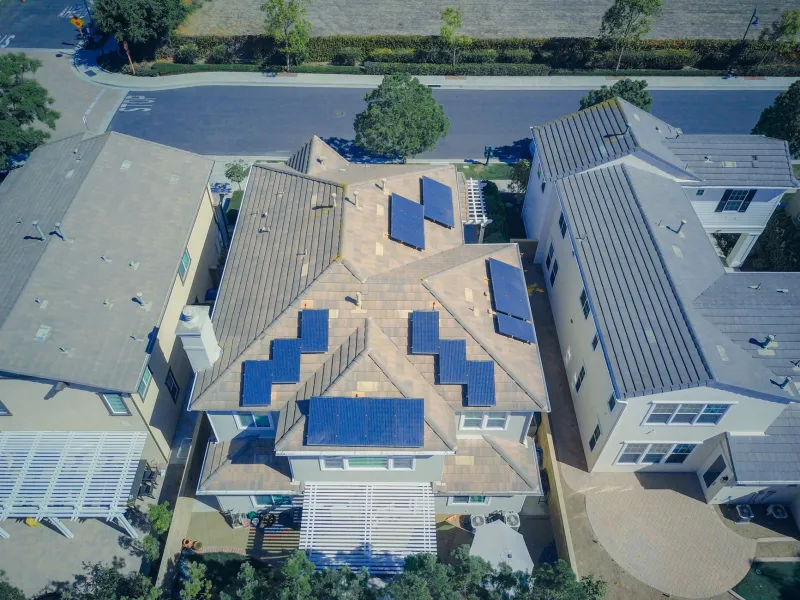
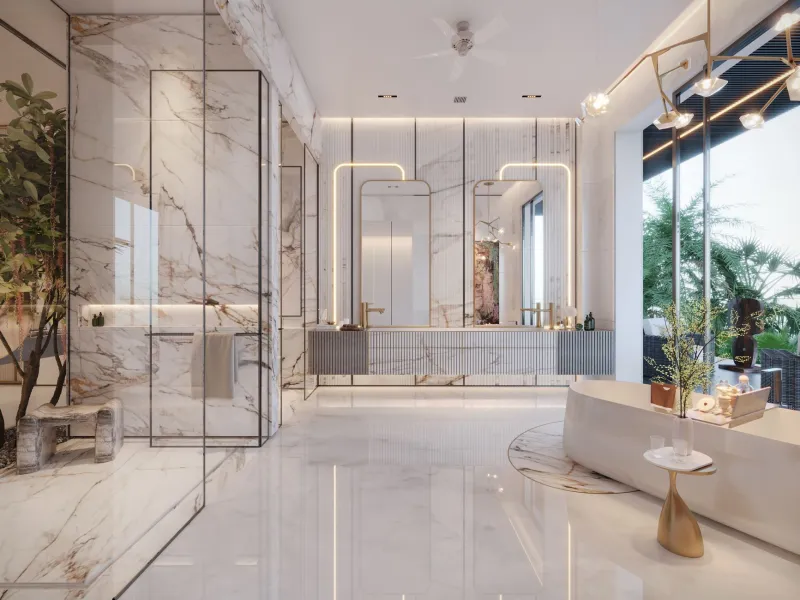
The physical changes are often the most visible. Older homes of modest grandeur—the four-bedroom Colonials and Spanish Revivals that defined a neighborhood's character for half a century—are acquired and either demolished or subjected to renovations so extensive that the original structure becomes a legal fiction. In their place rise residences of a different order entirely: purpose-built for a standard of living that requires home automation systems, subterranean garages, dedicated staff quarters, and interior volumes that dwarf anything the original architects imagined.
What Architecture Loses—and Gains
The tension between preservation and transformation is nowhere more legible than in the built environment. Historic districts and local architectural review boards exist precisely to mediate this tension, and in some communities, they exercise genuine authority. But in the highest tier of the residential market, the forces at work frequently outpace the regulatory frameworks designed to contain them.
This is not, it should be said, an argument for architectural stasis. Neighborhoods that refuse to evolve risk a different kind of decay—the genteel deterioration of places that have become museums of themselves, maintained in form but evacuated of vitality. The arrival of substantial new wealth, and the investment that accompanies it, can arrest that process and introduce a quality of construction and landscape design that elevates the entire enclave.
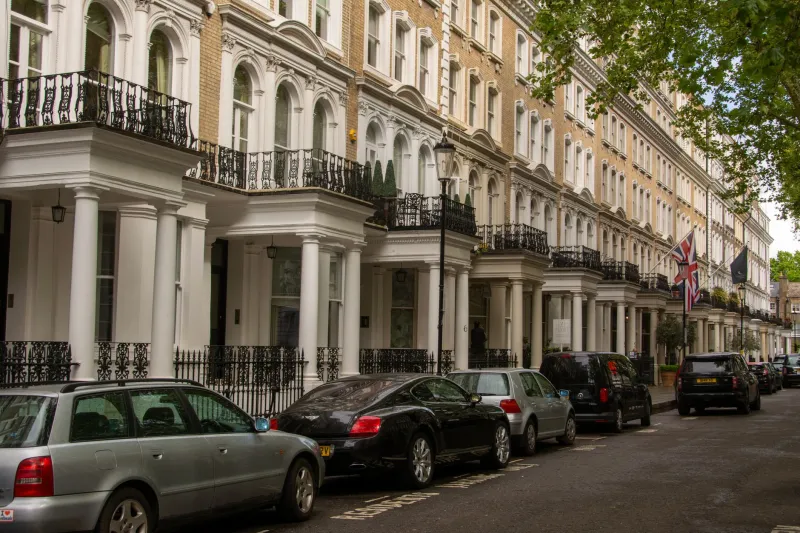
What is lost, however, is harder to quantify but no less real. The patina of accumulated time—the mature trees planted by previous generations, the slightly irregular setbacks that give a street its particular rhythm, the unassuming proportions of homes built before square footage became a proxy for status—these qualities do not survive wholesale renovation. They are, almost by definition, incompatible with the expectations of buyers operating at the apex of the current luxury market.
The irony is not lost on serious students of architecture: the very qualities that made a neighborhood desirable enough to attract transformative wealth are frequently the qualities that transformative wealth, in exercising its prerogatives, begins to erode.
The Social Recalibration
Beyond the physical, the social texture of established enclaves undergoes its own recalibration when the wealth profile of the resident base shifts dramatically. Communities that once derived their character from a relatively stable network of multigenerational families, civic institutions, and shared social conventions find themselves absorbing an influx of residents whose relationship to the neighborhood is, at least initially, transactional.
This is not a moral failing—it is a structural reality. A buyer who has acquired a property as one of several residences, or who has relocated from a different coast with no prior connection to the community, cannot be expected to arrive with the same depth of local attachment as a family that has occupied the same street for three generations. The social capital that animates a neighborhood's identity is built slowly and cannot be purchased outright.
In some cases, new residents of extraordinary means have proved to be transformative civic actors—funding institutions, investing in local infrastructure, and engaging with the community in ways that benefit far more than their immediate households. In others, the effect has been a hollowing out of the social fabric, as properties sit underoccupied and the human density that sustains local businesses, schools, and civic organizations quietly diminishes.
Preservation as a Strategic Position
For the real estate market at the highest level, these dynamics carry implications that extend beyond sentiment. Neighborhoods that successfully manage the tension between new wealth and existing character—that evolve without erasing—tend to demonstrate more durable value appreciation over time. The qualities that make a place irreplaceable are, almost by definition, finite. Once lost, they cannot be reconstructed, and the market premium they supported dissipates accordingly.
Some of the most sophisticated buyers in the current luxury market have internalized this principle with considerable clarity. Rather than approaching an established neighborhood as a site for maximum expression of their own preferences, they seek to inhabit it on its own terms—commissioning architecture that engages with local vernacular, investing in landscape restoration, and participating in the civic life of the community in ways that reinforce rather than disrupt its identity.
This posture is, in a meaningful sense, the most enlightened form of luxury ownership: the recognition that the value of an address is inseparable from the character of the community that surrounds it, and that stewardship is not a constraint on ownership but its highest expression.
The View From Inside the Enclave
America's most prestigious neighborhoods are not passive recipients of the forces acting upon them. They are, in many cases, communities with active voices, organized advocacy, and a long institutional memory. The outcomes in any given enclave will depend, in no small measure, on the degree to which that memory is honored—by new residents, by developers, and by the market intermediaries who facilitate the transactions that set these transformations in motion.
At Helmerstone, we hold a particular view of what the finest addresses represent. They are not merely aggregations of valuable land and distinguished architecture. They are places where the accumulated decisions of many generations have produced something that cannot be manufactured from scratch—a genuine sense of belonging, earned rather than purchased. The question facing America's most established enclaves is whether the arrival of new wealth will deepen that inheritance or quietly spend it down.