Beyond the Gate: How Private Infrastructure Is Becoming the Ultimate Luxury Amenity
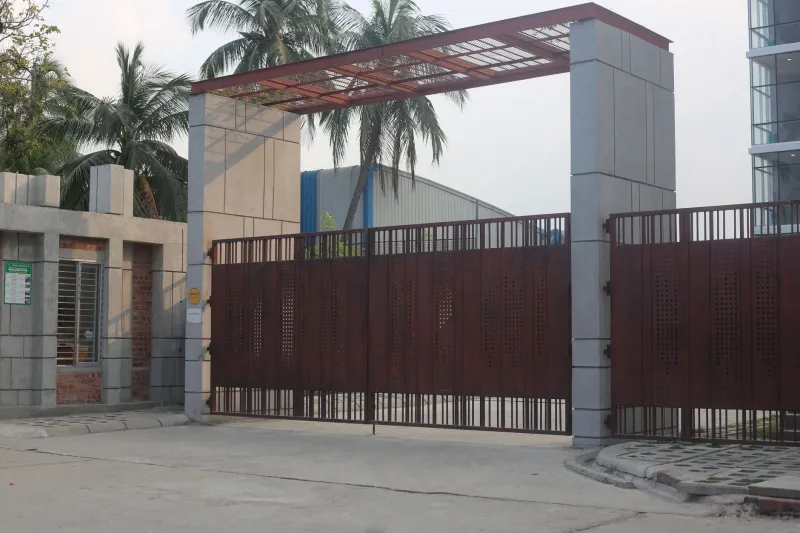
The gatehouse has long served as the defining symbol of residential exclusivity—a physical threshold separating the domain of the privileged from the world beyond. But in the most ambitious private residential developments taking shape across America today, the gatehouse is almost beside the point. The true boundary is invisible, running underground through fiber-optic conduit and high-voltage cable, encoded in proprietary software and redundant mechanical systems that ensure life within the perimeter proceeds with a reliability the surrounding municipality cannot match.
Private infrastructure—once the province of remote ranch compounds and island retreats where connection to public systems was a geographic impossibility—is becoming an intentional design choice among the nation's most affluent residential communities. It is, in the parlance of those who develop and inhabit these places, the ultimate amenity.
When Amenities Become Necessities
The evolution from amenity to necessity is a gradual one, and it is worth tracing carefully. A decade ago, the highest-end residential developments competed on the basis of what they offered above the surface: championship golf courses, spa facilities, private beach clubs, curated dining programs. These remain important differentiators. But a parallel conversation has been unfolding in the offices of developers, family offices, and the engineering firms they retain—one focused not on what residents can enjoy, but on what they can rely upon.
The catalysts are not difficult to identify. A succession of extreme weather events—hurricanes along the Gulf Coast and Eastern Seaboard, wildfires in California and the Mountain West, winter storms that crippled Texas's power grid in February 2021—exposed the fragility of public infrastructure in ways that were impossible for even the most insulated residents to ignore. When a Category 4 hurricane makes landfall, the private tennis courts and the curated wine cellar are equally irrelevant if the power is out for three weeks.
For ultra-high-net-worth families accustomed to engineering risk out of every other domain of their lives, this vulnerability was unacceptable. The response has been characteristically direct: build systems that do not depend on the grid.
The Architecture of Self-Sufficiency
What does privately developed infrastructure actually look like in practice? The answer varies considerably by geography and ambition, but several components recur across the most sophisticated projects currently under development.
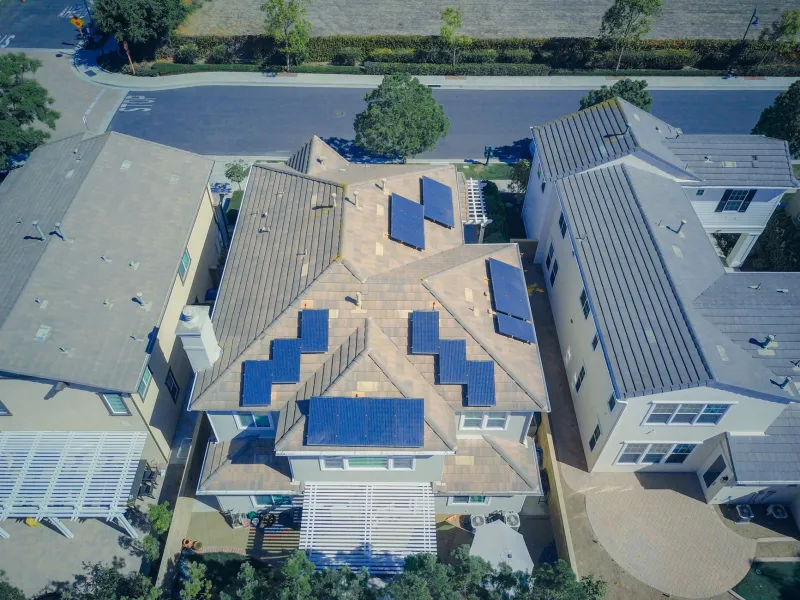
Energy Independence represents the most urgent priority for most communities. Developments in hurricane-prone Florida and the Carolinas have invested heavily in microgrid technology—localized energy systems capable of operating independently from the regional grid during outages. These systems typically combine utility-scale battery storage with solar generation and, in some cases, natural gas or diesel backup generation, creating layered redundancy that can sustain a community's full load for days or weeks without external input.
In the Mountain West, where wildfire risk has made utility-caused ignitions a genuine liability concern, several high-end communities have explored underground power distribution as a means of eliminating overhead lines entirely—a capital-intensive intervention that transforms the risk profile of the development while also improving its aesthetic character.
Proprietary Connectivity is the second pillar of the private infrastructure model. High-density fiber-optic networks, designed and owned by the community rather than leased from a telecommunications carrier, offer bandwidth and reliability that commercial providers rarely match in residential contexts. For residents who manage investment portfolios, conduct board meetings, and maintain global business operations from their primary residences, connectivity is not a luxury—it is a professional requirement. Several communities in the Carolinas and Utah have gone further, establishing private cellular infrastructure to eliminate dead zones within their boundaries.
Water and Waste Systems represent perhaps the most complex dimension of the private infrastructure model, and the one that most clearly signals a community's commitment to genuine self-sufficiency. Private well systems, water treatment facilities, and in some cases water reclamation and reuse infrastructure are being incorporated into master plans for developments in water-stressed regions of the American Southwest, where dependence on municipal supply introduces meaningful long-term uncertainty.
Family Offices as Infrastructure Investors
The financial architecture supporting these investments is as interesting as the physical infrastructure itself. In many cases, the capital is originating not from traditional real estate developers but from family offices—the private investment vehicles that manage the affairs of ultra-high-net-worth families—that are approaching private community infrastructure as a hybrid between real estate investment and private equity.
The logic is coherent. A community that owns its own energy, communications, and water systems has a structural competitive advantage over developments that depend on public utilities—an advantage that compounds over time as public infrastructure ages and regulatory complexity increases. The infrastructure investment is simultaneously a quality-of-life enhancement for current residents and a durable differentiator that supports property values over a multi-decade horizon.
Some of the most forward-thinking developments have structured their infrastructure assets as separate entities in which residents hold equity interests, creating alignment between the community's long-term interests and the stewardship of the systems that serve it.
The Design Implications
For architects and planners working at the intersection of luxury residential design and private infrastructure, this trend is opening genuinely new creative territory. The integration of mechanical and technological systems into the physical fabric of a community—the placement of battery storage, the routing of fiber conduit, the design of water treatment facilities that are functional, durable, and architecturally coherent—requires a level of cross-disciplinary collaboration that traditional residential development rarely demands.
The most distinguished projects treat infrastructure not as a back-of-house concern but as an integral dimension of the design narrative. Energy systems become visible expressions of the community's values. Communication infrastructure is designed with the same attention to material quality and longevity as the residences it serves.
A New Definition of Distinction
At Helmerstone, we observe that the meaning of a distinguished address is always evolving—shaped by the priorities of the era and the expectations of those who inhabit its finest properties. The current moment is producing a definition of distinction that reaches beneath the surface, into the systems that make daily life reliable, comfortable, and insulated from the uncertainties that beset the world beyond the gate.
In that sense, private infrastructure is not merely a practical investment. It is a statement of intent—a declaration that the community's residents have chosen to take full responsibility for the quality of their environment, rather than delegating it to systems and institutions beyond their control. That, in the truest sense, is what it means to own an address that is genuinely apart.