Invisible Walls: How the Ultra-Wealthy Are Reinventing Exclusivity for an Era of Radical Transparency
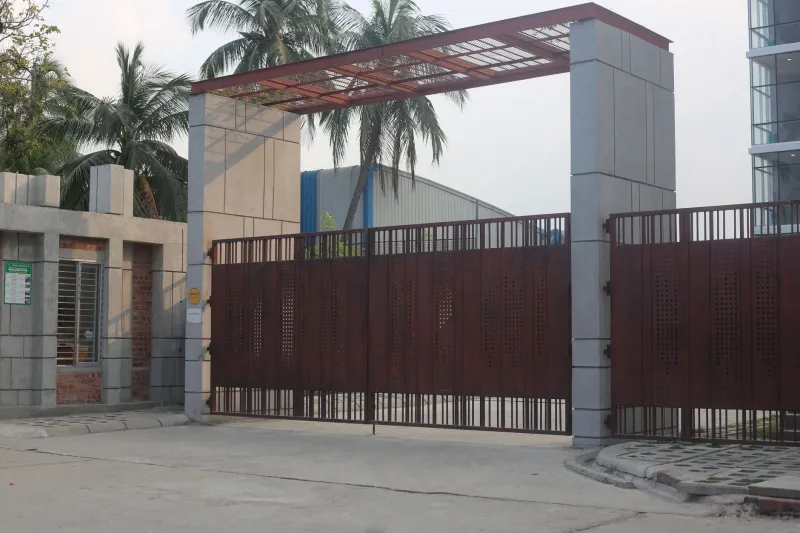
The gate at the entrance to a storied Palm Beach estate does not move when a resident approaches. There is no keypad, no intercom, no visible sensor. The gate simply opens—responding to a biometric signal embedded in the vehicle itself, cross-referenced against a residential registry maintained on a private server with no external network connection. The resident passes through without slowing. No record of the entry exists on any system accessible to a third party.
This is what modern exclusivity looks like: not a locked door, but a seamless threshold. Not a visible barrier, but an invisible one.
Across America's most consequential residential enclaves—from the private road communities of Bel Air to the waterfront compounds of Fisher Island to the ranch retreats of Woody Creek—the architecture of privacy is undergoing a quiet but radical transformation. Driven by the convergence of ubiquitous digital surveillance, social media exposure, and an increasingly sophisticated threat environment, the stewards of elite residential communities are rethinking not just their security infrastructure but the fundamental social and spatial grammar of exclusivity itself.
The Inadequacy of the Traditional Model
For much of the twentieth century, residential exclusivity was expressed through legible symbols: guarded gates, walled perimeters, private roads, and the implicit social codes of neighborhoods where an unfamiliar face was immediately noticed. These mechanisms were effective in their era. They are now, in important respects, insufficient.
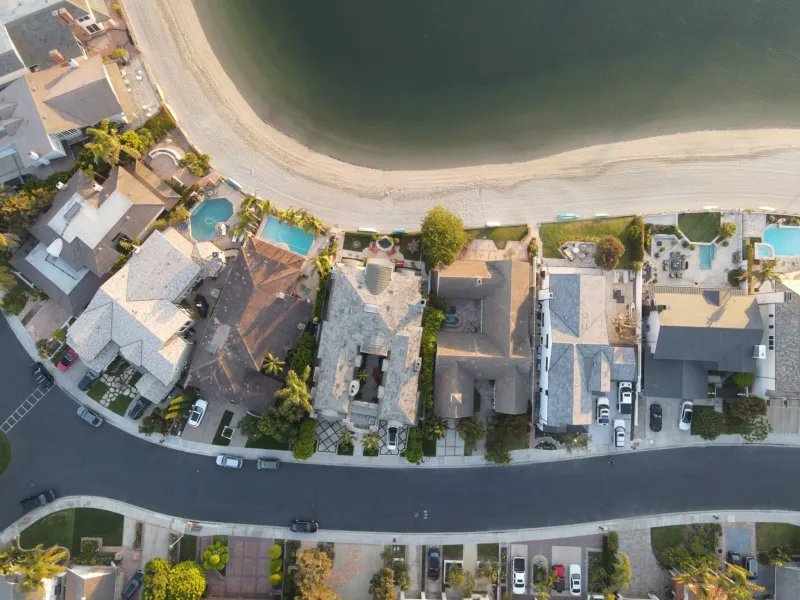
The proliferation of commercial satellite imagery has made the interiors of even the most private compounds visible to anyone with a broadband connection. Drone technology has rendered airspace a new frontier of intrusion. Public property records—accessible in most American jurisdictions through online portals—can reveal ownership structures, transaction histories, and assessed values with a few keystrokes. And the social media behavior of household staff, contractors, and even guests creates a continuous, largely uncontrollable stream of locational and visual data.
"The perimeter is no longer the primary line of defense," observes a security consultant who works exclusively with family offices and ultra-high-net-worth residential clients. "The primary line of defense is information architecture—controlling what can be known, and by whom, before any physical boundary is ever reached."
The Rise of Privacy-by-Design Development
A new cohort of luxury developers has internalized this shift and is building it into the physical and legal structure of their projects from the ground up. The emerging model might be described as privacy-by-design—an approach that treats the suppression of unwanted information as a design objective equal in priority to aesthetic quality or structural integrity.
In practical terms, this means several things. Ownership is increasingly held through layered LLC structures that obscure the identity of the beneficial owner at the point of public record. Some developers in Florida and Nevada—states with comparatively flexible privacy statutes—are now offering title-holding arrangements specifically engineered to prevent name-based property searches from returning meaningful results.
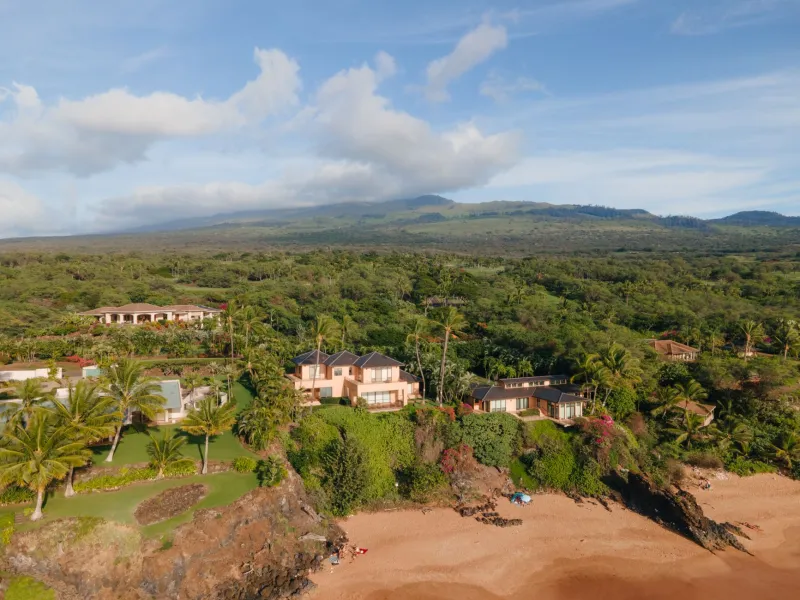
Architecturally, the shift is equally pronounced. Where an earlier generation of luxury homes signaled status through visibility—grand facades set close to the street, sweeping motor courts designed to impress arriving guests—the contemporary prestige home increasingly turns its back on the public realm entirely. Setbacks are maximized. Landscaping is dense and deliberately opaque. Primary living spaces are oriented toward interior courtyards or rear-facing water views rather than street frontages. The message is not look at what is here. It is there is nothing to see.
Several notable residential communities in the Mountain West have taken this logic further still, acquiring buffer parcels of land around their perimeters—not to develop them, but to prevent development by others that might compromise sight lines, acoustic privacy, or the character of the approach.
Digital Countermeasures and the New Security Stack
The physical reconfiguration of elite residential environments is accompanied by an increasingly elaborate digital infrastructure. High-end residential security consultants now routinely advise clients on what the industry terms a residential security stack: a layered system of countermeasures that addresses threats from drone surveillance, cellular interception, network intrusion, and open-source intelligence gathering.
Faraday-shielded rooms—spaces engineered to block all electromagnetic signals—were once the exclusive province of government facilities. They are now a standard specification request in the highest tier of custom residential construction in markets such as Greenwich, Montecito, and the Hamptons. Dedicated dark-fiber internet connections, which route data through private infrastructure rather than commercial networks, are similarly becoming a feature of significant new construction.
Landscaping has acquired a new technical dimension as well. Acoustic consultants are engaged to model sound propagation across properties, identifying corridors where conversation might be captured by directional microphones and recommending planting schemes or water features that serve as natural masking elements. The reflecting pool, in this context, is not merely decorative.
The Social Architecture of Modern Exclusivity
Yet technology alone cannot reproduce what the most durable exclusive communities have always possessed: a social architecture that enforces its own norms without formal mechanism. In Fisher Island, the Yellowstone Club, and the private road associations of Buckhead and River Oaks, the most effective gatekeeping has never been the guard booth. It has been the shared understanding among residents that certain behaviors—inviting press attention, hosting events that generate public records, discussing the community's affairs with outsiders—are simply not done.
This informal code is now being supplemented, and in some cases formalized. Several newer private residential communities have incorporated non-disclosure provisions into their purchase agreements—not merely for proprietary development information, but for general residential conduct. Buyers acknowledge, at closing, obligations around photography, social media, and the disclosure of community amenities or membership rosters.
The legal enforceability of such provisions varies by jurisdiction and has not been extensively tested in American courts. Their primary function may be less legal than social: they establish, from the moment of acquisition, that membership in the community carries obligations of discretion that are treated with the same seriousness as any other covenant.
A New Definition of Luxury
What emerges from this landscape is a revised understanding of what luxury residential living means at its highest expression. Scarcity of land, quality of construction, and refinement of finish remain foundational. But they have been joined—and in some cases surpassed in perceived value—by something less tangible: the capacity to live without being watched.
For a generation of wealth accustomed to operating in environments of radical transparency, the ability to close a door that cannot be opened by technology, public record, or social pressure is not merely a comfort. It is, in the fullest sense of the word, a distinction. And in the language of prestige real estate, distinction has always commanded its own premium.