The Anatomy of a Premium Address: What Economics and Emotion Tell Us About America's Most Coveted Zip Codes
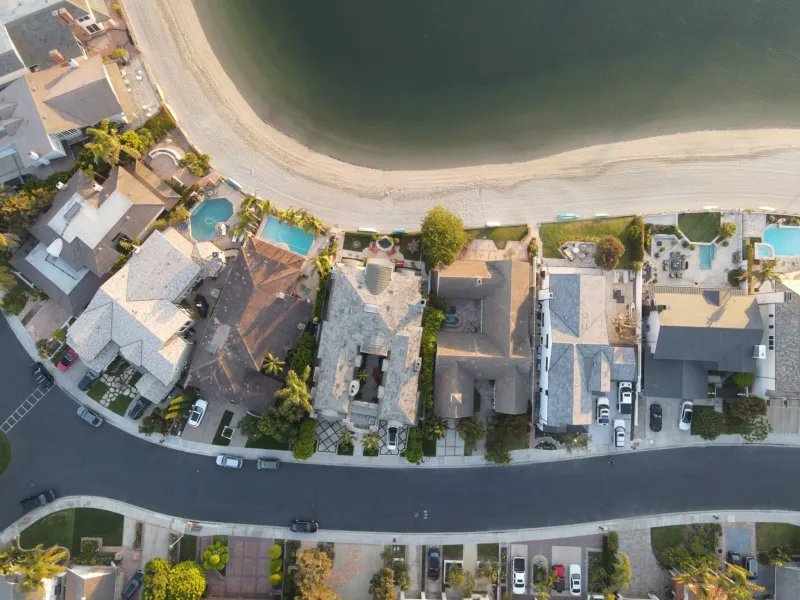
There is a particular house in East Hampton, New York—a cedar-shingled colonial with a modest footprint and unremarkable finishes—that sold for $4.2 million in 2023. A structurally superior home in a neighboring Suffolk County township, with more square footage, a newer roof, and a larger lot, traded at $1.1 million the same year. The difference was not craftsmanship. It was a zip code.
This is the central paradox of prestige real estate: the land beneath a property can be worth exponentially more than the structure above it, and that valuation is governed by forces that blend the empirical with the deeply human. For affluent buyers navigating America's luxury market, understanding those forces is not merely academic—it is the difference between acquiring an asset and acquiring a legacy.
The Measurable Foundations of Location Premium
Economists who study residential pricing are careful to distinguish between what they call hedonic attributes—the quantifiable characteristics of a property—and the neighborhood externalities that exist entirely outside the transaction itself. School district quality is among the most rigorously studied of those externalities.
Research from the National Bureau of Economic Research has repeatedly demonstrated that buyers pay a measurable premium to reside within the attendance boundaries of high-performing public school districts, even when they have no school-age children. In markets such as Palo Alto, California, and Winnetka, Illinois, that premium has been estimated at between 15 and 25 percent of property value. The mechanism is straightforward: families with means compete intensely for access, and that competition is capitalized directly into home prices.
Accessibility to economic power centers operates by a similar logic. The corridor stretching from Greenwich, Connecticut, into Westchester County commands persistent premiums partly because of its proximity to Manhattan's financial district—a commuting calculus that has endured for more than a century. In Washington, D.C., the neighborhoods of Georgetown and Kalorama carry valuations that reflect not merely their architecture but their gravitational proximity to institutional power. Embassy Row addresses are not simply desirable; they are structurally embedded in the geography of influence.
The Role of Scarcity—Real and Manufactured
Natural scarcity is perhaps the most honest driver of location premium. Aspen, Colorado, is ringed by federal wilderness and national forest land, making meaningful residential expansion a near-impossibility. Nantucket's island geography imposes an absolute constraint on supply. Malibu's coastal bluffs are finite. When demand from an ever-expanding global wealth class presses against a fixed or shrinking supply of available parcels, price appreciation becomes structurally inevitable rather than speculative.
Yet scarcity is not always a gift of geography. In many cases, it is carefully maintained through institutional mechanisms: restrictive zoning codes, historic preservation designations, minimum lot-size requirements, and the quiet influence of established residents on local planning boards. Palm Beach, Florida, for instance, has long employed zoning ordinances that limit density and building typology with a rigor that functions as a deliberate scarcity engine. The result is a market where the median single-family sale price has consistently ranked among the highest in the nation—not merely because the properties are exceptional, but because the municipality has made it structurally difficult to add supply.
Cultural Cachet and the Compounding Effect of Association
Beyond the measurable, there exists a category of value that resists easy quantification: the cultural mythology of a place. The Hamptons are not simply beaches and farm stands. They carry the accumulated weight of decades of association with American artistic, financial, and social elites. That association is self-reinforcing. Prominent buyers arrive because prominent buyers have always arrived, and their presence validates the next generation of prominent buyers.
Behavioral economists describe this dynamic as preference clustering—the tendency of high-net-worth individuals to seek proximity not only to amenities but to one another. The result is a feedback loop in which the social composition of a neighborhood becomes itself a form of amenity, commanding a premium as tangible as a private beach easement.
Ski towns like Telluride and Sun Valley operate on a similar logic. Their original appeal was topographic—exceptional terrain, clean air, dramatic scenery. But the premium attached to a Telluride address today reflects something additional: the town's status as a gathering point for a specific stratum of American wealth and influence. The mountain is the same as it was in 1970. The cachet is not.
When Premium Is Perception—and When That Matters
A question worth posing directly: when a significant portion of a location's premium is rooted in cultural perception rather than economic fundamentals, does that premium carry the same investment durability?
The honest answer is: sometimes, and it depends on the time horizon.
Prestige addresses anchored in genuine scarcity, strong institutional infrastructure, and proximity to enduring economic centers have demonstrated remarkable price resilience across market cycles. Greenwich, Malibu, and the Upper East Side of Manhattan each absorbed the 2008 financial crisis and the 2020 pandemic shock with comparatively limited long-term damage to their relative price positions.
Neighborhoods whose premiums rest more heavily on transient fashionability—the briefly celebrated arts district, the beach community that attracted a single season of celebrity attention—are more vulnerable to mean reversion when the cultural moment passes.
For buyers making decisions at the top of the market, the due diligence question is therefore not simply why is this address expensive today but what are the structural anchors that will keep it expensive in twenty years. School districts can be rezoned. Access roads can be rerouted. Cultural moments fade. But a barrier island with no developable land, adjacent to a thriving metropolitan economy, with a century of established prestige, is a different proposition entirely.
Reading the Market with Precision
Luxury buyers who approach location premium with analytical rigor—decomposing the price gap into its constituent elements and stress-testing each one—are better positioned to distinguish durable value from expensive sentiment. That discipline does not diminish the emotional dimension of acquiring a significant address. It simply ensures that the emotion is informed.
At Helmerstone, we observe consistently that the most sophisticated acquisitions in the prestige market are those where the buyer has done exactly this work: understanding not merely that a zip code commands a premium, but precisely why it does, and whether those reasons are likely to compound or erode over time. An address, after all, is not simply where one lives. It is a statement about what one believes will endure.