Billionaires Are Redrawing the Map: How America's Wealthiest Are Redefining Where—and How—They Live
Across the American landscape, a quiet but consequential transformation is underway. The nation's most affluent individuals are not merely purchasing properties—they are engineering entire residential ecosystems that reflect a new set of priorities shaped by global instability, technological possibility, and an evolving definition of personal sanctuary.
In 2024, the ultra-high-net-worth residential market—broadly defined as individuals commanding a net worth exceeding $30 million—has demonstrated a resilience and dynamism that stands in sharp contrast to the broader softening observed across most housing segments. Where median-market buyers have contended with elevated interest rates and constrained inventory, the upper echelons of American wealth have continued to transact at a pace and scale that underscores just how insulated truly elite real estate has become from conventional economic pressures.
The Compound Effect: Privacy as the New Premium
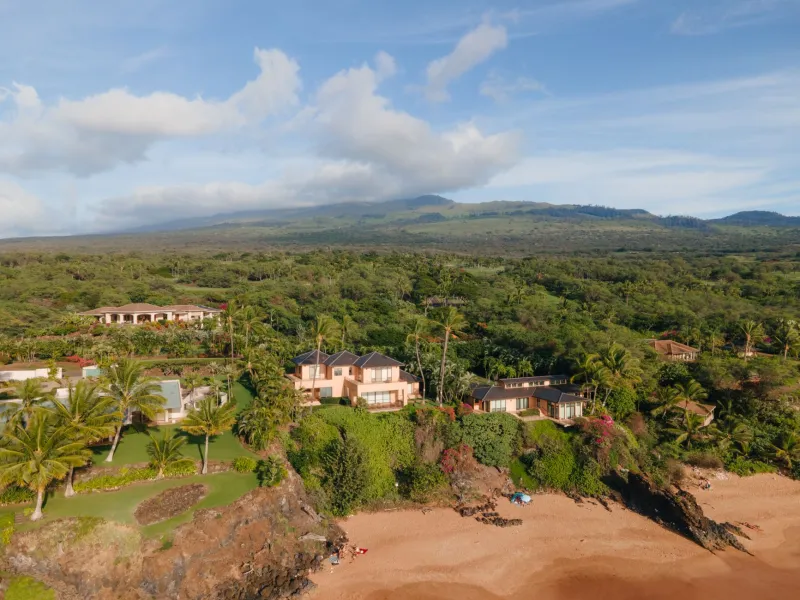
Perhaps the most defining trend among ultra-high-net-worth buyers in the current cycle is the decisive pivot away from urban penthouses and resort-adjacent estates toward sprawling, self-contained private compounds. These are not weekend retreats in the traditional sense. They are meticulously planned residential environments that integrate security infrastructure, agricultural capacity, energy independence, and curated social amenities within a single, fortified perimeter.
Luxury market analysts tracking transactions above $20 million have noted a marked increase in the acquisition of contiguous land parcels, particularly across Montana, Wyoming, Colorado, and the emerging corridors of rural Tennessee and North Carolina. The appeal is multifaceted: lower tax burdens in certain states, geographic distance from urban density, and the psychological assurance that comes with land ownership at scale.
"The definition of luxury has fundamentally shifted," observes one senior analyst at a prominent national real estate advisory firm. "For this buyer, the ultimate status symbol is no longer a prestigious zip code. It is the capacity to be entirely self-sufficient—to exist, if necessary, entirely independent of external systems."
This orientation toward resilience has translated into architectural briefs that would have seemed extraordinary even a decade ago. Buyers are routinely requesting integrated solar arrays paired with battery storage systems capable of sustaining a property for weeks without grid connection. Geothermal heating and cooling, private water wells with redundant filtration, and on-site food production facilities have migrated from novelty to near-standard expectation in the highest tier of the market.
Smart Environments, Not Smart Homes
The concept of the "smart home" has long been a feature of aspirational real estate marketing. In 2024, however, the discourse among ultra-wealthy buyers has evolved considerably beyond app-controlled lighting and voice-activated appliances. What this cohort demands is more accurately described as a responsive, integrated residential environment—one in which technology serves as invisible infrastructure rather than visible feature.
Building automation systems at this level now encompass biometric access protocols, AI-assisted climate management that adapts to occupant behavior patterns, and comprehensive health monitoring embedded within the home's architecture itself. Air quality, water purity, electromagnetic field management, and circadian lighting systems calibrated to individual sleep cycles are among the specifications increasingly appearing in buyer briefs submitted to architects and developers.
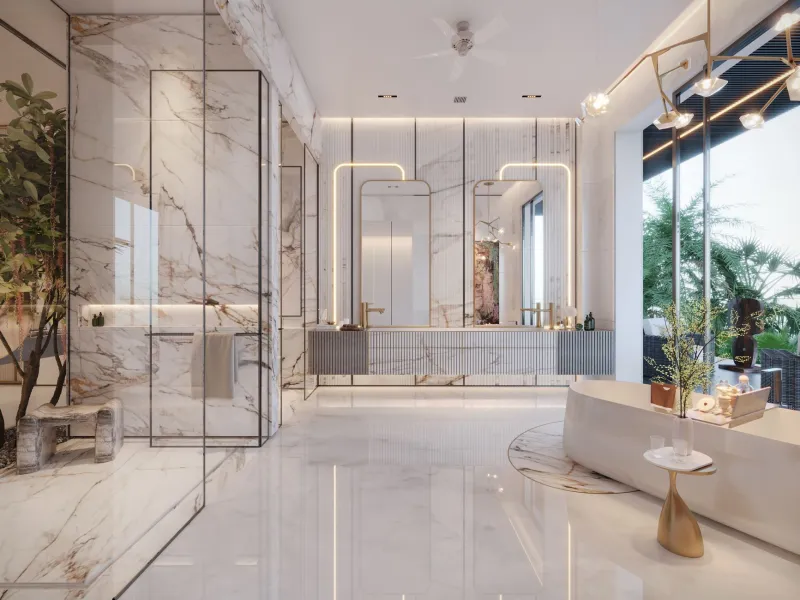
The wellness dimension of luxury residential design has, in fact, become one of the most commercially significant forces reshaping the market. Dedicated wellness wings—encompassing cold plunge facilities, infrared saunas, hyperbaric chambers, and private spa treatment rooms staffed by on-call professionals—are now considered baseline inclusions at the highest price points. Several notable transactions in the $40 million-and-above range in 2024 have featured purpose-built medical suites equipped for minor procedures and staffed by concierge physicians.
Geopolitics and the Great Redistribution
The relocation patterns of America's wealthiest residents cannot be fully understood without accounting for the geopolitical anxiety that has quietly informed residential decision-making since at least 2020. Sustained instability across multiple global theaters, combined with heightened domestic political uncertainty in an election year, has prompted a meaningful segment of ultra-high-net-worth individuals to conduct what might be described as a strategic audit of their residential footprint.
For some, this has meant diversifying holdings across multiple domestic jurisdictions—maintaining a primary residence in a low-tax state while acquiring secondary properties in geographically distinct regions as a hedge against localized disruption. For others, particularly those with significant international business interests, it has meant consolidating assets within the United States at the expense of foreign holdings, reflecting a broader reassessment of political risk abroad.
Florida, Texas, and Tennessee continue to absorb significant inbound ultra-luxury demand, driven in part by their favorable tax profiles. However, analysts have flagged a notable secondary wave of interest in less traditionally prominent markets. Western North Carolina, the Asheville corridor in particular, has attracted considerable attention—a trend that preceded and was subsequently complicated by the catastrophic flooding events of late 2024, which themselves became a pointed illustration of the climate resilience considerations now central to the luxury buyer's calculus.
Climate Resilience as a Core Investment Thesis
The events of recent years have rendered climate risk an unavoidable variable in luxury real estate valuation. For ultra-high-net-worth buyers, this has prompted a sophisticated reassessment of what constitutes a desirable location—one that weighs not merely present-day amenity and aesthetics, but projected climatic stability over a 20- to 50-year horizon.
Coastal properties in historically prestigious markets—certain areas of South Florida, portions of the Hamptons, and select Pacific Coast enclaves—now face substantive underwriting challenges that have begun to exert measurable downward pressure on values. Meanwhile, elevated inland locations with temperate climates, access to fresh water, and lower wildfire exposure have seen their desirability surge in direct proportion to buyers' growing environmental awareness.
Architects and developers serving this market have responded with structural specifications designed to address specific regional hazards. Fire-resistant construction assemblies, elevated foundations engineered for flood mitigation, and reinforced building envelopes capable of withstanding extreme wind events are increasingly mandated by buyers rather than offered as optional upgrades.
The Remote Work Dividend
The normalization of remote and hybrid work arrangements among executive and entrepreneurial professionals has had a disproportionate effect on the ultra-luxury segment. When physical proximity to a corporate headquarters or financial center becomes operationally optional, the constraints that once anchored the wealthy to specific metropolitan areas dissolve—and with them, the premium commanded by those locations.
The result has been a liberation of residential choice that has benefited secondary and tertiary markets considerably. Ranch properties in the mountain West, equestrian estates in Virginia and Kentucky, and private island holdings off the coasts of Maine and the Pacific Northwest have all attracted heightened interest from buyers who, in prior decades, might have felt professionally obligated to maintain a primary residence in New York, Los Angeles, or Chicago.
For Helmerstone's clients navigating this landscape, the opportunity is as significant as the complexity. The reordering of luxury residential priorities—toward privacy, resilience, wellness, and technological integration—represents not merely a market trend, but a fundamental recalibration of what it means to live well at the highest level of American affluence. Those who understand this shift, and act upon it with precision, will find themselves not simply purchasing real estate, but securing a foundation for an entirely reimagined way of life.