Built for Centuries: The Ultra-Wealthy Patrons Commissioning Estates They Were Never Meant to Fully Inhabit
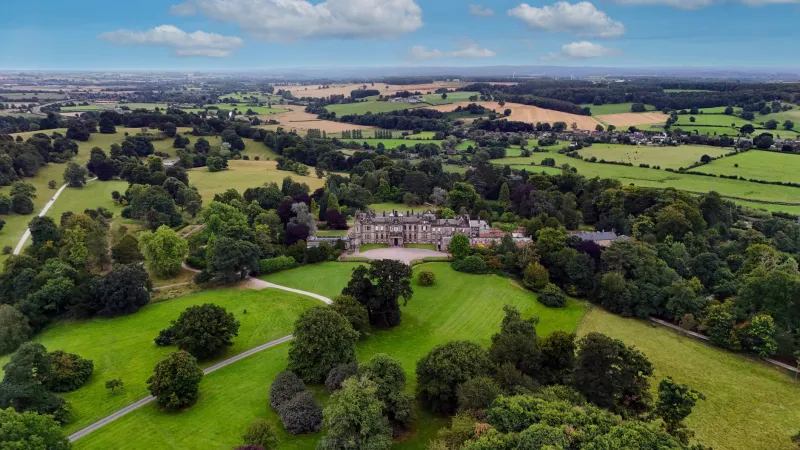
There is a particular category of client that architects and estate advisors speak about with a mixture of reverence and bewilderment: the individual who arrives not with a wish list, but with a manifesto. They are not seeking a home in any conventional sense. They are seeking permanence.
Across the American landscape—from the Hudson Valley to the hill country of central Texas, from the coastal bluffs of Maine to the high desert of New Mexico—a quiet but significant movement is underway. Ultra-high-net-worth individuals are commissioning estates of extraordinary ambition and scale, properties designed not for daily habitation but for something far more enduring: dynastic continuity, philosophical legacy, and the quiet assertion that certain forms of wealth were never meant to be liquid.
The Architecture of Intention
What distinguishes a legacy estate from a luxury residence is not square footage or material cost, though both tend to be considerable. It is intentionality. The clients driving this trend are, in many cases, individuals who already possess multiple residences—penthouses in financial capitals, ski retreats, island compounds. They are not building out of necessity. They are building out of conviction.
"There is a moment in the conversation when you realize this project isn't about them," says one New York-based architect who has completed several such commissions over the past decade and asked not to be identified by name. "It's about the grandchildren they haven't met yet. The institution they want to create. The idea they want to leave standing."
This shift in client motivation has profound implications for how these properties are designed. Where a primary residence is calibrated to the rhythms and preferences of its occupant, a legacy estate must accommodate unknowable future inhabitants—children raised in different eras, with different sensibilities, different families of their own. The design challenge becomes one of timelessness rather than personalization: how do you build something that will feel neither dated nor alien to someone who may not be born for another twenty years?
The answer, according to the designers who specialize in this work, lies in a rigorous commitment to classical proportion, material authenticity, and structural permanence. Synthetic materials are rarely specified. Stone, old-growth timber, hand-forged metalwork, and locally sourced brick are favored not merely for their aesthetic qualities but for their longevity and their capacity to age with dignity.
The Financial Architecture Behind the Vision
For all their philosophical weight, legacy estates are rarely conceived in isolation from financial strategy. Sophisticated estate attorneys and wealth advisors are typically present from the earliest planning stages, and the property's legal structure is often as carefully considered as its floor plan.
Family limited partnerships, irrevocable trusts, and dynasty trust structures—available in states including South Dakota, Nevada, and Delaware—are commonly employed to hold these assets across multiple generations while limiting estate tax exposure. In certain configurations, a property placed within such a structure may appreciate substantially over decades without triggering the transfer taxes that would accompany a conventional inheritance.
The Internal Revenue Service has scrutinized some of these arrangements with increasing attention in recent years, and the regulatory landscape continues to evolve. Nevertheless, the fundamental appeal persists: a well-structured legacy property can function simultaneously as an architectural monument and a remarkably tax-efficient wealth transfer vehicle.
"The clients who pursue this strategy are not doing so to avoid responsibility," notes one wealth advisor who works with families in the nine-figure range. "They see the property as the physical expression of a value system they want to transmit. The tax efficiency is almost incidental—a confirmation that the strategy is sound, not the reason it was chosen."
Specialists in the Long View
The professionals who serve this market occupy a niche within a niche. Legacy estate architects are distinguished not only by their technical capabilities but by their willingness to subordinate their own aesthetic preferences to a client's multigenerational vision—and, paradoxically, by their ability to resist a client's more idiosyncratic impulses when those impulses might compromise the property's long-term coherence.
Several firms have built reputations almost entirely on this work. They tend to be small, selective, and deeply versed in historical precedent—not because their clients necessarily want Georgian manor houses or Spanish Colonial haciendas, but because understanding how architecture has endured across centuries is prerequisite to creating something capable of doing the same.
Interior designers engaged for these projects face a related but distinct challenge. Furnishings and finishes must be specified with an eye toward both immediate livability and long-term adaptability. Rooms are frequently designed to serve multiple functions across different life stages—a nursery that transitions to a study, a formal dining room that doubles as a meeting space for family governance discussions.
Landscape architects, too, play an outsized role. The grounds of a legacy estate are often conceived as a decades-long project in themselves: orchards planted now that will not reach full maturity for thirty years, woodlands managed according to sustainable forestry principles, kitchen gardens designed to be productive and meaningful for inhabitants who have not yet been born.
The Paradox at the Center
There is something quietly paradoxical about the phenomenon Helmerstone is describing. These are individuals of extraordinary agency and achievement—people who have shaped industries, directed capital at scale, and exercised influence that most will never approximate. And yet the properties they commission with such deliberate care are, by design, properties they will inhabit only partially, only temporarily, and in some cases only ceremonially.
Psychologists who study high-net-worth behavior suggest that this is not paradoxical at all, but rather a natural expression of a particular form of ambition: the desire not merely to succeed within one's own lifetime, but to matter beyond it. The legacy estate is, in this reading, less a home than a statement—an assertion that the values, the taste, and the judgment of its creator deserve to persist.
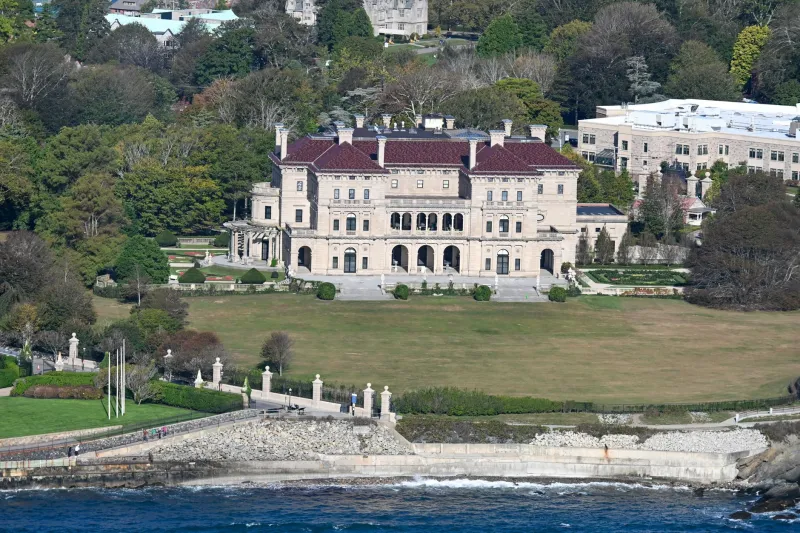
Whether that assertion proves correct is, of course, a question that only time can answer. The history of American architecture is populated with grand estates built for permanence that were subsequently demolished, subdivided, or repurposed beyond recognition. Newport's Gilded Age cottages, many of them now museums or institutions, stand as both testament and cautionary tale.
The clients commissioning today's legacy estates are, presumably, aware of this history. And yet they build. Perhaps that is the most revealing thing about them: the willingness to invest in permanence while acknowledging its uncertainty is itself a form of distinction—one that no portfolio of liquid assets could replicate.
At Helmerstone, we recognize this disposition not as extravagance, but as a particular and serious relationship with place. It is, in the end, what the finest addresses have always represented: not merely shelter, but the physical form of what one believes is worth preserving.