The Allure of Absence: Why America's Most Discerning Buyers Are Paying Premiums for Places No One Can Find
For most of the past two decades, the logic of luxury real estate has operated on a recognizable axis. Prestige begat visibility, visibility begat demand, and demand begat price. The most coveted addresses in America were, almost by definition, the most discussed ones — places whose names carried immediate cultural weight, whose landscapes appeared reliably in the pages of shelter publications, and whose social coordinates were understood by anyone who mattered within certain circles. To own property in such places was to participate in a shared grammar of aspiration.
That grammar is being quietly rewritten.
Among a specific and growing segment of ultra-wealthy buyers — those for whom the question is never whether they can afford a given property but whether it merits their attention — a counterintuitive preference has taken hold. These buyers are not merely seeking privacy within celebrated enclaves. They are seeking locations that the discovery apparatus of contemporary culture has not yet reached, and in many cases may never reach. They are, in effect, purchasing the future by acquiring places that refuse to have one in the conventional sense.
The Discovery Problem
To understand the shift, one must first appreciate how thoroughly the mechanisms of luxury real estate discovery have changed. Geotagged social media content, algorithmic travel recommendations, and the proliferation of high-end hospitality in formerly remote corridors have collectively compressed the timeline between a place's emergence and its saturation. What once took a generation — the gradual elevation of a region from obscurity to fashionability to overcrowding — now transpires within a few years, sometimes less.
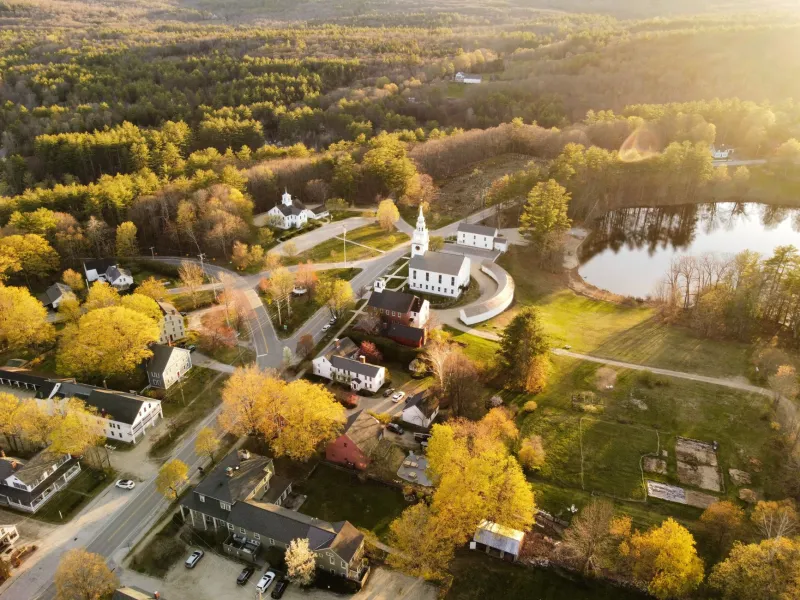
The buyers most attuned to this compression are precisely those who experienced it firsthand in places they once prized. They watched as favored retreats in coastal Maine, the high desert of New Mexico, or the rural reaches of the Hudson Valley moved from genuine discovery to lifestyle-magazine fixture to weekend-traffic inconvenience within a single property cycle. The lesson absorbed was not that these places had failed them, but that discovery itself had become the enemy of the qualities they were seeking.
The response, among the most sophisticated within this cohort, has been to move upstream of the discovery process entirely.
Where, Precisely, Is Nowhere
The geography of this preference is not easily mapped, which is rather the point. Buyers of this disposition are not congregating in a single alternative region that one could identify and report upon without accelerating the very dynamic they are attempting to escape. What can be observed, however, are patterns in the types of places drawing serious attention.
Certain counties in the interior of the American West, far removed from the ski-town circuits and ranch-style resort developments that have colonized so much of that landscape, are recording quietly remarkable transactions — properties changing hands at prices that reflect genuine scarcity without any corresponding infrastructure of luxury amenity. Parts of the rural South, particularly in states whose topography and agricultural heritage render them resistant to the conventions of resort development, are seeing similar activity. Sections of the upper Midwest, long dismissed by coastal buyers as categorically unserious, are attracting a level of interest that local brokers describe with a mixture of surprise and discretion.
What these places share is not a common landscape or climate but a common condition: they have not been narrated. No influential publication has assigned them a defining identity. No celebrity acquisition has provided a cultural permission slip. No hospitality brand has arrived to translate their character into a legible amenity experience. They remain, in the fullest sense, unedited.
Anonymity as Architecture
The buyers drawn to such places speak, when they speak at all, in terms that reveal a sophisticated understanding of how location functions psychologically. Privacy, in their framing, is not merely the absence of unwanted intrusion. It is the presence of a particular quality of attention — the ability to inhabit a place fully, without the mediating awareness that others are watching, cataloguing, or aspiring to replicate the experience.
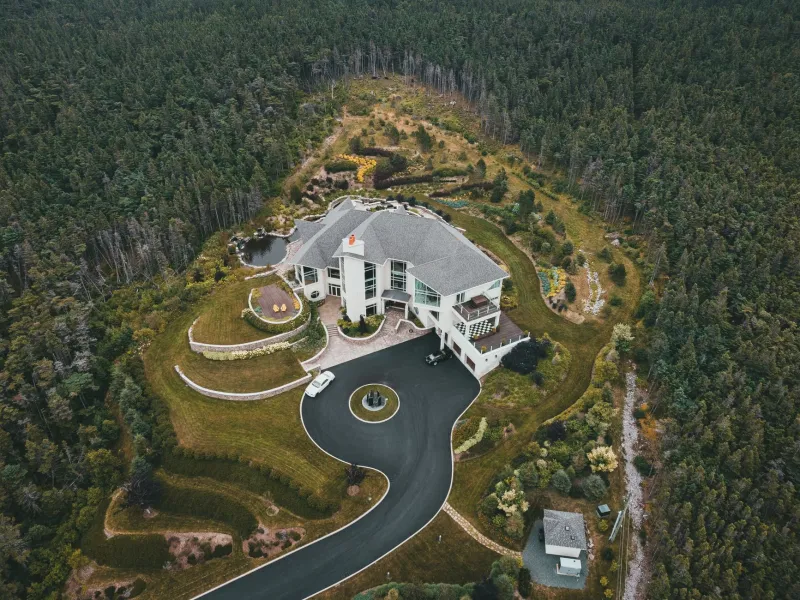
This distinction matters architecturally as well as philosophically. Properties acquired in genuinely obscure locations are frequently designed or renovated with a different set of priorities than those in established luxury markets. Without the implicit audience that a prestigious address implies, the design conversation turns inward. The question is not how a property presents itself to the world but how it serves the specific sensibilities of its owner. The result, in many cases, is work of unusual integrity — homes that have been shaped by genuine preference rather than the ambient pressure of comparable properties and market expectation.
Several of the country's most accomplished residential architects report that commissions in non-traditional locations have become among the most creatively satisfying of their practices, precisely because the brief is unconstrained by the conventions that govern work in established luxury markets.
The Economics of Obscurity
For a market intelligence perspective, the question of how obscurity is priced — and how that pricing evolves — is both genuinely complex and consequential. The conventional model assumes that luxury value accretes through visibility: a location becomes more valuable as more people recognize it as desirable. The buyers under discussion here are operating on an inverted logic, in which the value of a location is partly constituted by its resistance to that process.
This creates a pricing dynamic that is difficult to analyze through standard comparable-sales methodology. A property in an undiscovered location may trade at a figure that reflects neither the intrinsic qualities of the land and structure nor any prevailing market consensus, but rather a premium attached to the buyer's conviction that the location will remain resistant to discovery — or, alternatively, a discount that reflects the absence of the liquidity that established markets provide.
Sophisticated buyers in this space are generally not troubled by the liquidity question. Their holding intentions tend to be long, their financial positions sufficiently diversified that a single property's market performance is not a material concern, and their priorities weighted heavily toward the experiential rather than the transactional. They are not acquiring these properties as investments in the conventional sense. They are acquiring them as environments.
The Limits of the Thesis
It would be imprecise to suggest that the entire logic of prestigious address has been abandoned by the ultra-wealthy market. The most celebrated enclaves in America continue to attract serious buyers, and the properties within them continue to command prices that reflect genuine, durable demand. The trend described here represents a particular sensibility within a particular segment — influential, perhaps, but not yet dominant.
What it does suggest, however, is that the definition of luxury location is becoming more plural and more personal than it has historically been. The assumption that all serious buyers are competing for the same small inventory of recognized addresses is giving way to a more complex picture, in which a meaningful subset of the most capable buyers has opted out of that competition entirely — not because they cannot win it, but because they have decided the prize no longer interests them.
For those who study the movements of this market with care, that decision is among the most telling signals of the current moment. When the buyers who can afford anything begin choosing nothing that can be found, it is worth asking what, precisely, they have found instead.