The Weight of Walls: What Happens When a Legendary Estate Passes to the Next Generation
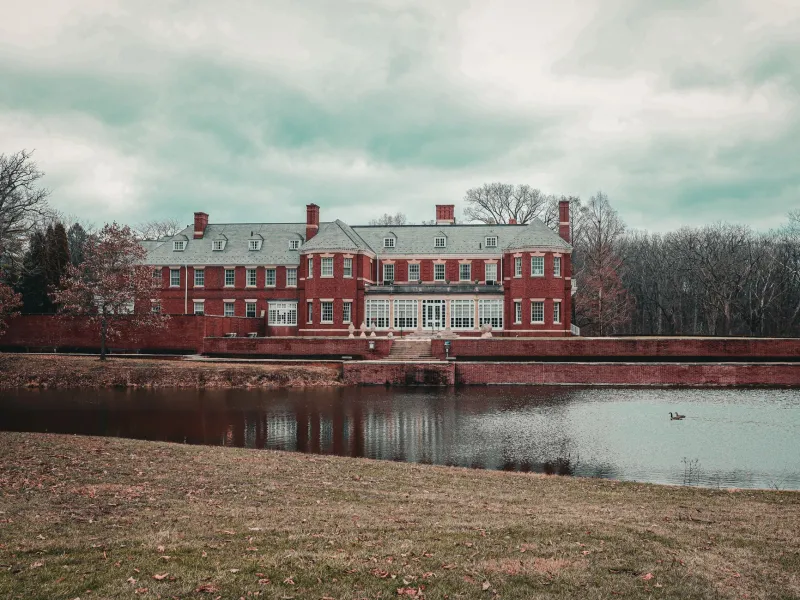
There is a particular kind of silence that settles over a legendary estate after its original steward is gone. The rooms remain. The grounds persist. The portraits continue their watchful vigil from paneled walls. What changes — irrevocably — is the nature of the relationship between property and person. For the heir who steps into that silence, the question is rarely as simple as whether to keep the house. The question is what the house intends to keep of them.
Across the United States, a generational transfer of extraordinary residential wealth is quietly underway. Iconic estates — properties that in some cases represent not merely architectural achievement but living records of American industry, culture, and aspiration — are passing from founding hands into those of their inheritors. What these successors discover upon arrival is that they have not simply received a property. They have accepted a post.
The Estate as Institution
Wealth advisors who specialize in multigenerational asset transfer are careful to distinguish between inheriting a house and inheriting an estate. The distinction is not merely semantic. A house is a dwelling. An estate, particularly one of significant historical or cultural standing, functions more like an institution — one with its own staff hierarchies, maintenance obligations, community relationships, and, in many cases, legal encumbrances in the form of historic preservation easements or deed restrictions.
"The first conversation I have with a new inheritor is almost never about finances," notes one senior advisor at a private family office that manages assets for several prominent American dynasties. "It's about identity. Who are you in relation to this place? Because until they answer that, every other decision — restoration, renovation, sale, donation — is premature."
That identity question carries unusual weight when the property in question has shaped the public imagination. Estates associated with founding industrial families, early twentieth-century social luminaries, or figures of political consequence arrive bearing reputations that precede the heir entirely. To own such a property is to become, at least in the eyes of the surrounding community, its custodian — whether or not one ever consented to the role.
Reverence and Its Costs
For many inheritors, the initial instinct is preservation. The estate, as received, becomes a form of tribute — maintained in something approaching its original condition as an act of filial devotion. This impulse is not without merit. Properties held in careful stewardship often appreciate both financially and culturally, their integrity intact and their narratives undiluted.
But reverence, sustained without examination, carries its own costs. Architects who specialize in heritage properties frequently encounter clients paralyzed by the fear of altering what their predecessors created. "There is a difference between preservation and stasis," observes one principal at a firm with deep experience in historic residential restoration. "A house that no one truly inhabits — that no one changes, argues with, or loves messily — eventually becomes a museum. And museums, however beautiful, are not homes."
The practical burdens compound the psychological ones. Landmark-caliber estates routinely require annual maintenance expenditures that rival the operating budgets of small commercial enterprises. Roofing systems on properties of significant age, structural assessments mandated by preservation agreements, the specialized labor required to restore original plasterwork or period millwork — these are not discretionary line items. They are the cost of keeping history standing.
For inheritors who did not personally accumulate the wealth that underwrites such obligations, the financial reality can arrive as a genuine shock. "No one tells you what it actually costs to be the person who owns a place like this," one heir to a Hudson Valley estate confided to her estate manager during the first year of ownership. "They just hand you the keys."
The Architecture of Reinvention
The more nuanced challenge — and, for many inheritors, the more urgent one — is finding a way to occupy the estate authentically. To live, rather than curate. This requires a form of creative courage that does not come naturally to those raised in the long shadow of a family monument.
Architects and interior designers who work regularly with inherited properties speak of a process they describe, in various formulations, as layering. The goal is not to erase what preceded the current generation, nor to freeze the estate in amber, but to introduce the inheritor's own sensibility in ways that are legible without being disruptive. A modernized kitchen wing that respects the original massing. A guest pavilion that echoes the estate's historical vocabulary while accommodating contemporary expectations of comfort. A landscape intervention that honors the formal bones of the original design while introducing plantings that reflect the current owner's own relationship to the land.
"The estates that survive generationally are the ones that absorb change gracefully," says one preservation architect whose practice spans both private commissions and landmark designations. "They have enough formal integrity to accommodate reinvention without losing coherence. The ones that don't survive are the ones that couldn't accommodate the living."
When Letting Go Is the Answer
Not every inheritor arrives at a resolution that involves keeping the estate. For some, the most honest answer to the steward's dilemma is divestiture — and the most responsible form of divestiture is one that ensures the property's future rather than simply transferring its obligations.
Conservation land trusts, university endowments, and preservation-focused nonprofit organizations have become increasingly sophisticated partners for families navigating this decision. Several notable American estates have passed in recent years into institutional stewardship arrangements that preserve public access, protect architectural integrity, and relieve the inheriting family of obligations they were neither equipped nor inclined to assume.
Wealth advisors are careful not to frame such decisions as failures. "Releasing a property to an institution that will care for it properly is not a betrayal of family legacy," one advisor notes. "In many cases, it is the highest expression of it. The family recognized what the place was, and they ensured it would endure."
The Steward's Reckoning
What distinguishes the inheritors who navigate this transition most successfully is not the size of their resources, though resources clearly matter. It is the quality of their self-knowledge — their ability to separate what they genuinely want from what they believe they are supposed to want, and to make decisions from that honest ground.
Legendary estates, by their nature, are not neutral. They have opinions. They exert pressure. They make demands that the original builder never explicitly articulated but that every subsequent occupant feels nonetheless. The heir who can stand inside that pressure and respond with clarity — not defiance, not submission, but genuine discernment — is the one who has a chance of making the estate theirs.
At Helmerstone, we have observed that the most enduring residential legacies are rarely the product of preservation alone. They are the product of a succession of thoughtful hands, each generation adding its own considered chapter to a story that the property itself continues to tell. The steward's burden, ultimately, is not the weight of the walls. It is the responsibility of authorship.
And that, for those with the fortitude to accept it, is also the gift.