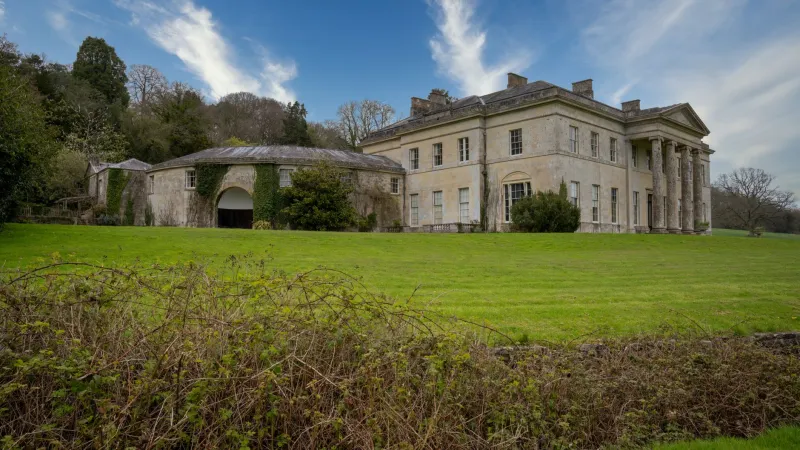
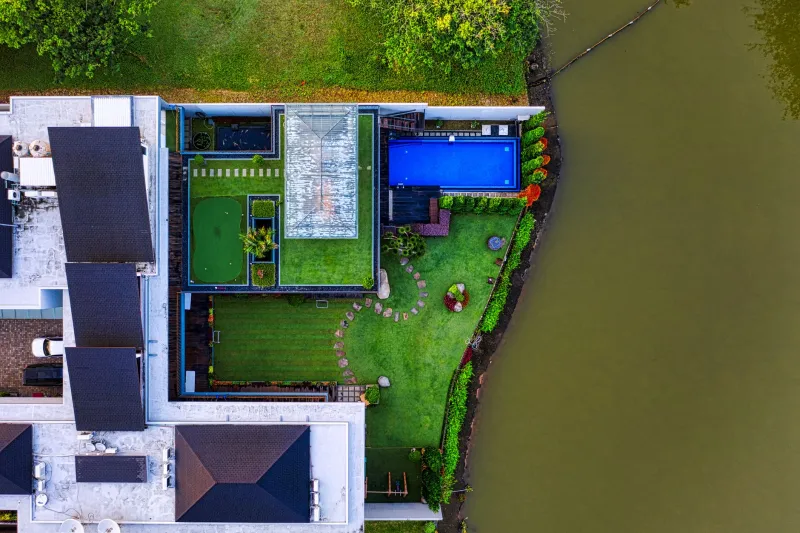
Entry by Invitation Only: How Restricted Access Became the Ultimate Luxury Amenity
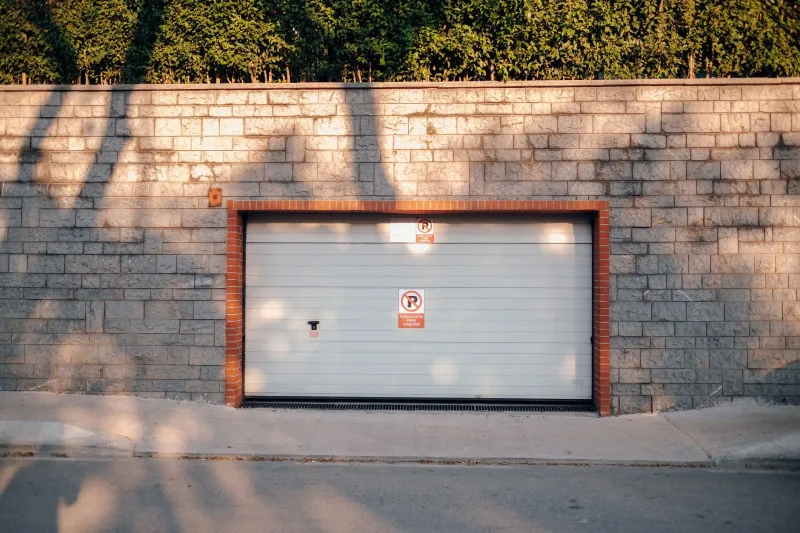
There is a category of American estate that does not appear in any database. It is not photographed for editorial spreads, not referenced in broker communications that travel beyond a single trusted circle, and certainly not listed on any platform that accepts a standard subscription. To visit one of these properties—let alone to acquire it—requires something the market has rarely demanded before: proof that you belong there at all.
This is the architecture of discretion, and it is reshaping the upper stratum of American real estate with quiet but unmistakable force.
The Credential as Amenity
For decades, luxury real estate has distinguished itself through the conventional vocabulary of scarcity: limited inventory, irreplaceable location, bespoke construction. What is emerging now operates on an entirely different register. The most sought-after estates among ultra-high-net-worth buyers are those where access itself functions as the primary amenity—where the friction of entry is not an inconvenience to be minimized but a feature to be preserved.
Brokers operating at this level describe a consistent pattern. Prospective buyers are not presented with listing sheets. They are, instead, introduced through networks whose membership is itself subject to scrutiny. In some cases, background investigations precede any property conversation. In others, a formal letter of introduction from an existing member of a private land consortium is the only path forward. The showing, when it finally occurs, may involve nondisclosure agreements, limited photography, and a carefully managed itinerary that reveals only what the seller has sanctioned.
The effect is deliberate. When access is governed by credential rather than capital alone, the property acquires a dimension of meaning that no square footage figure or architectural pedigree can replicate.
Security as Architecture
It would be reductive to interpret this trend purely through the lens of personal security, though security is unquestionably part of the calculus. The most prominent buyers in this space—executives, founders, multigenerational wealth holders—have long understood that public visibility carries real risk. A property that can be researched, toured, and assessed by anyone with a real estate license offers a different threat profile than one whose address is known only to a handful of vetted individuals.
But the appetite for credentialed access runs deeper than threat mitigation. These buyers are constructing, through the act of acquisition itself, a statement about how they intend to inhabit the world. The estate that cannot be casually viewed is the estate that cannot be casually understood. It resists the flattening gaze of the market. It demands that those who encounter it do so on its own terms.
Architects and estate designers engaged by this class of buyer have begun incorporating physical discretion into their briefs from the earliest stages. Entry sequences are designed not merely to impress but to disorient—to make the approach to a residence feel earned rather than simply navigated. Gates, landforms, mature plantings, and deliberate misdirection all serve the same purpose: the property should not announce itself to those who have not been prepared to receive it.
The Valuation Question
For appraisers and acquisition advisors, credentialed properties present a genuine methodological challenge. Comparable sales—the bedrock of conventional valuation—are difficult to establish when the transactions themselves are conducted off-market, documented in private instruments, and never surfaced through public records at standard price points. The result is a valuation environment where price discovery depends almost entirely on relationships rather than data.
This opacity is not accidental. Sellers in this segment have no interest in establishing a publicly legible market value. The price a property commands is, in part, a function of how few people are permitted to bid on it. Scarcity of access amplifies scarcity of supply, and the compounding effect on value is substantial. Several advisors familiar with this market suggest that properties operating under credentialed access protocols routinely transact at premiums that would be difficult to justify through conventional analysis—and that buyers accept this premium not despite the opacity but because of it.
A New Grammar of Marketing
The marketing of these properties requires a complete abandonment of the conventions that govern even the most discreet end of the standard luxury market. There are no listing photographs, no virtual tours, no curated descriptions written for the benefit of an aspirational readership. The property is communicated through conversation—through the careful, sequential disclosure of information to individuals who have demonstrated, at each stage, that they are qualified to receive the next.
This is, in its way, a return to a much older model of real estate dealing—one that predates the internet, predates the MLS, and in some respects predates the modern conception of real estate as a consumer product. It is the model of the private introduction, the trusted intermediary, the handshake that carries more legal and social weight than any document.
For the brokers who operate in this space, the work is less transactional than curatorial. They are not presenting inventory to buyers. They are managing relationships between properties and the rare individuals capable of appreciating them appropriately. The language they use reflects this orientation: they speak of stewardship, of fit, of a buyer's readiness for a particular estate—as though the property itself has criteria that must be satisfied.
What This Reveals About Luxury's Direction
The credentialed estate is not merely a product category. It is a philosophical position. In an era when nearly every category of luxury goods has been democratized—or at least made visible—through digital platforms and social media, the property that refuses visibility represents a pointed counterstatement. It insists that true distinction cannot be photographed, aggregated, or algorithmically recommended.
For America's most deliberate buyers, this insistence has become its own form of resonance. They are not simply acquiring square footage or views or architectural provenance. They are acquiring a relationship with a place that the world, by design, will never fully know. And in that unknowability, they find something that no amount of transparency could provide: the singular satisfaction of a boundary that holds.